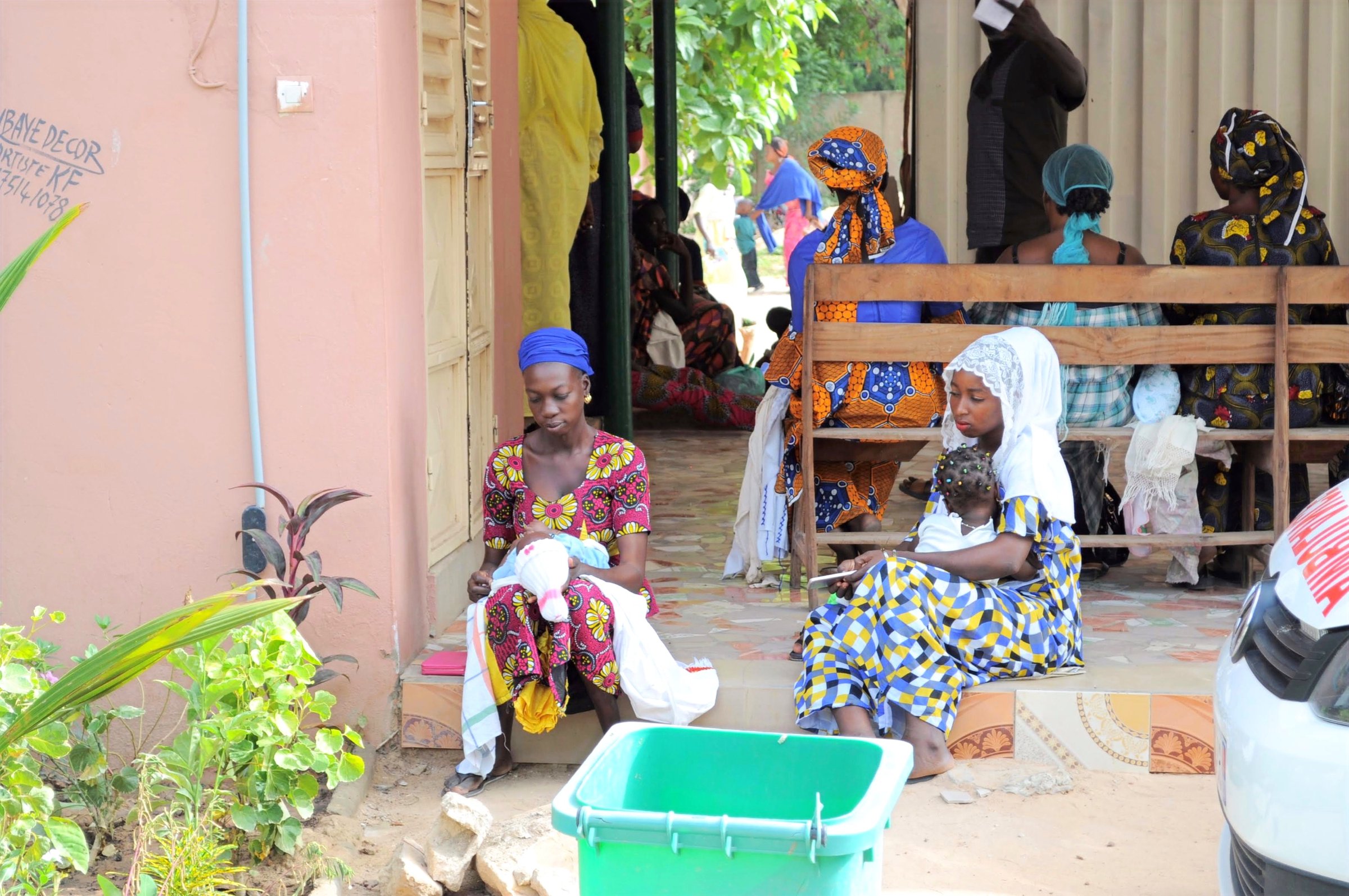
Our guiding principle is the sustainable development of Africa. Along the way there are many social challenges: health posts without power, schools without power, and harvests lost because they cannot be stored. We address them through two lines of business.
The first is social impact projects carried out with international organisations and governments (B2G). We bring solar power and telecommunications to health posts and schools that had none. In these health posts, more than 600 deliveries have taken place with electricity. At the first primary school equipped, the pass rate for the primary school leaving certificate was reported to have risen from 31% to 77% the following year.
The second is a private business: industrialising areas without grid power. The solar power installed through our international projects runs cold rooms, freezers and agricultural processing machines. With this equipment, we process mangoes together with the women’s group GIE DIAMI SANDIARA. In Senegal, about 50,000 tonnes of mangoes are lost every year. The processed mango is now being promoted in Japan and France, and sample shipments to Japan have begun.
Exports bring foreign currency into Africa. Processing creates work in the village. With an income, the people who work can invest, by their own means, in the health of mothers and children and in their children’s education. We aim for a society in which working people secure the future of the next generation through their own efforts.
This page sets out what has happened in each field, and where the figures come from.
Health
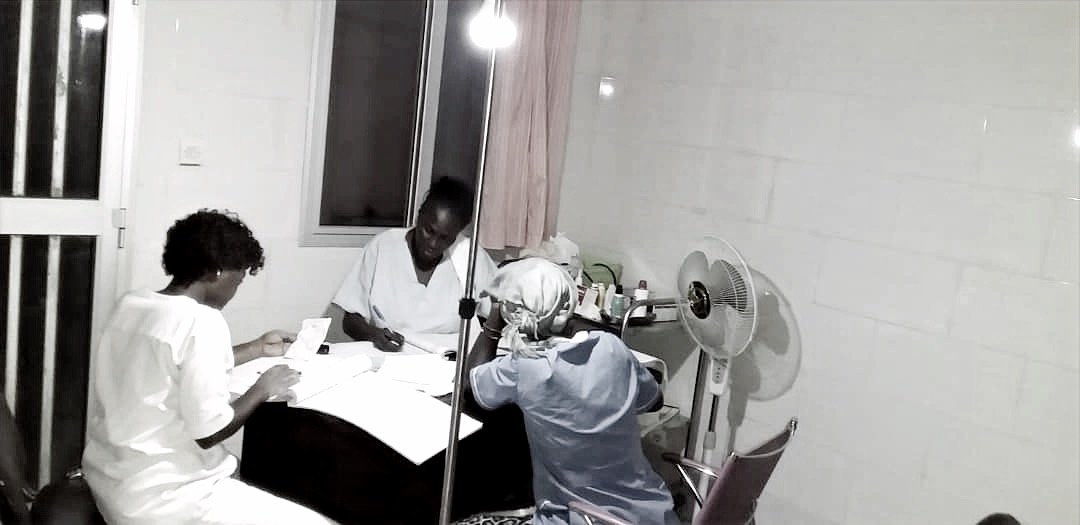
In health posts, the electricity is used for night consultations and deliveries. The nights when the midwife held a torch between her teeth are over. In 2019, we electrified 10 health posts. More than 600 deliveries have since taken place there with electricity. In 2026, under JICA’s JICA Biz programme, we equipped 3 health posts in Casamance. In Casamance, the photocopy that once required a boat trip to town is now printed in the consultation room.
Education
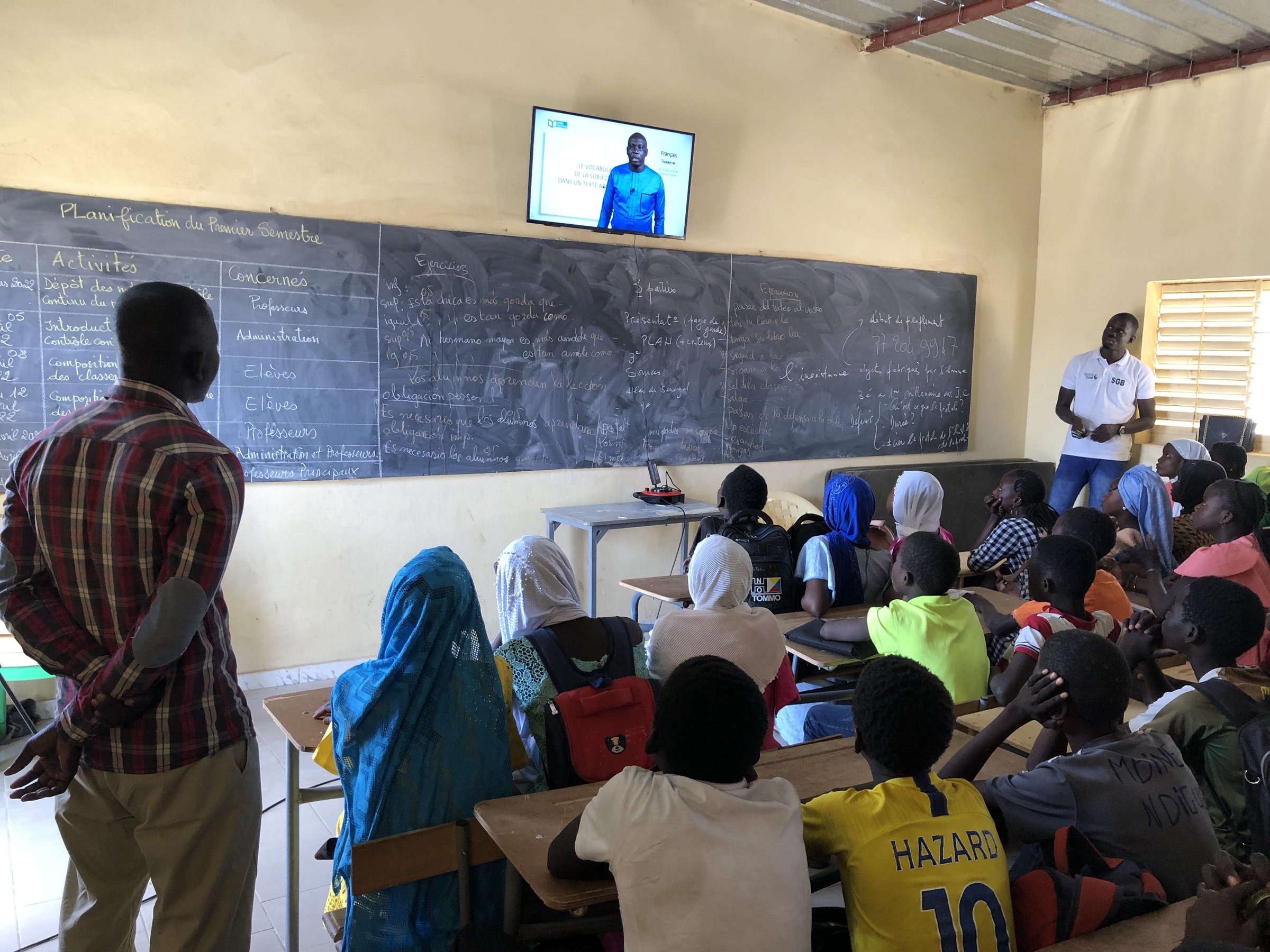
At the first primary school in Senegal equipped with a TUMIQUI Smart Kit, the pass rate for the primary school leaving exam was reported to have risen from 31% to 77% the following year. Power and video teaching materials are part of the conditions that support teachers’ work in class. This result led to the deployments with Senegal’s Ministry of National Education, and then to the 147 units delivered for UNICEF in 122 schools in The Gambia. For IOM (International Organization for Migration) in The Gambia, we delivered 45 units.
Power infrastructure for local industry
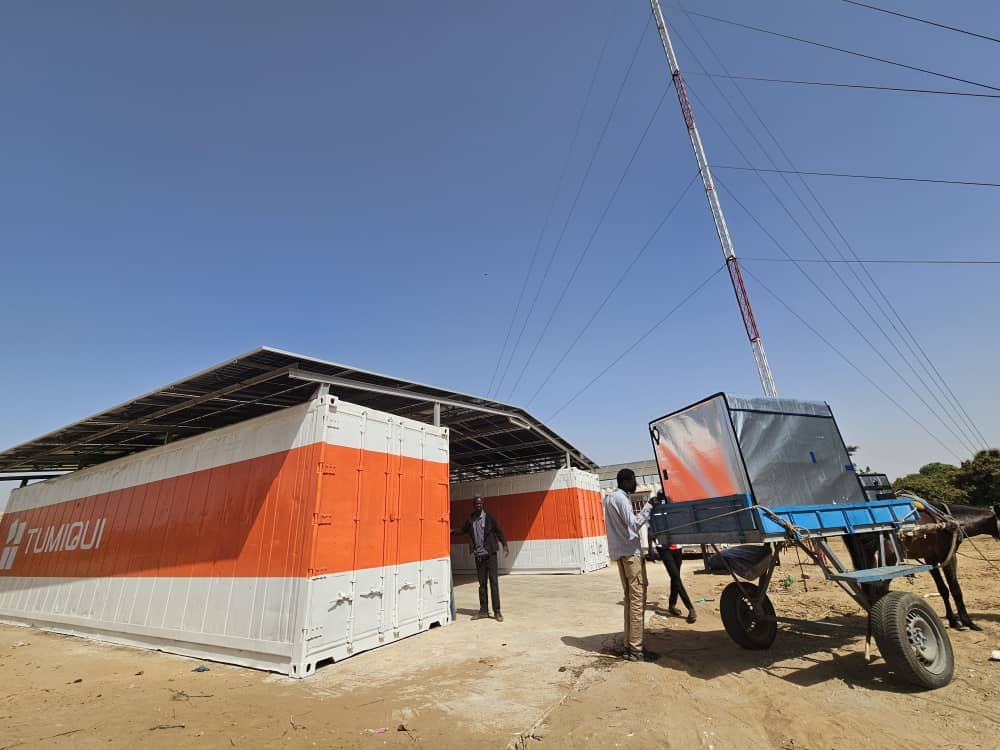
The two solar cold storage sites in Sandiara are designed to run 24 hours a day on solar panels and batteries only, with no grid connection. At Site A, we added the KIOSK, a small shop whose refrigerator runs on solar power. In February 2026, its first customer was a local secondary school student who came in for a cold drink on the way home from school.
Eight years of work in Africa have taught us one thing. Bringing a good product is not enough to make a business. Most products are not designed for Africa’s heat, power cuts and dust. The product has to be brought in, improved in the field and kept running by people based locally. Only then is there a business. From there, we see three forms that can last. Paths 1 and 3 are described here, and Path 2 under “Processing and export”.
Path 1. B2G2B. A facility financed by a government or an international organisation, through public procurement or a service contract, is run by a private company. From the start, we design who will operate it after the programme ends, how maintenance will be paid for and where its income will come from. The two Sandiara sites are owned by the company. They were built with a government subsidy and a foundation grant. They are where we test this way of operating.
Path 3. Solar power in a JCM partner country. Senegal is a partner country of Japan’s Joint Crediting Mechanism (JCM). On solar power, we are continuing discussions with the parties concerned. The timing and the terms will be announced once they are settled.
Path 1: B2G2BPath 3: JCM solarThe two Sandiara sitesRead the story of the first customer
Processing and export
In Senegal, an estimated 50,000 tonnes of mangoes are lost every year. The fruit ripens all at once and there is nowhere to keep it cold. At the two solar cold storage sites in Sandiara, we process mangoes with the women’s group GIE DIAMI SANDIARA. The products are being promoted in Japan and France, and sample shipments to Japan have begun. GIE DIAMI SANDIARA carries out the day-to-day production and quality control. We provide the equipment and the hygiene methods.
Path 2. Process locally and export. Products processed locally are exported to Japan and Europe to bring in foreign currency. Mango processing is the example. It is now at the stage of the first sample shipments to Japan. It is the path closest to the top of the pyramid.
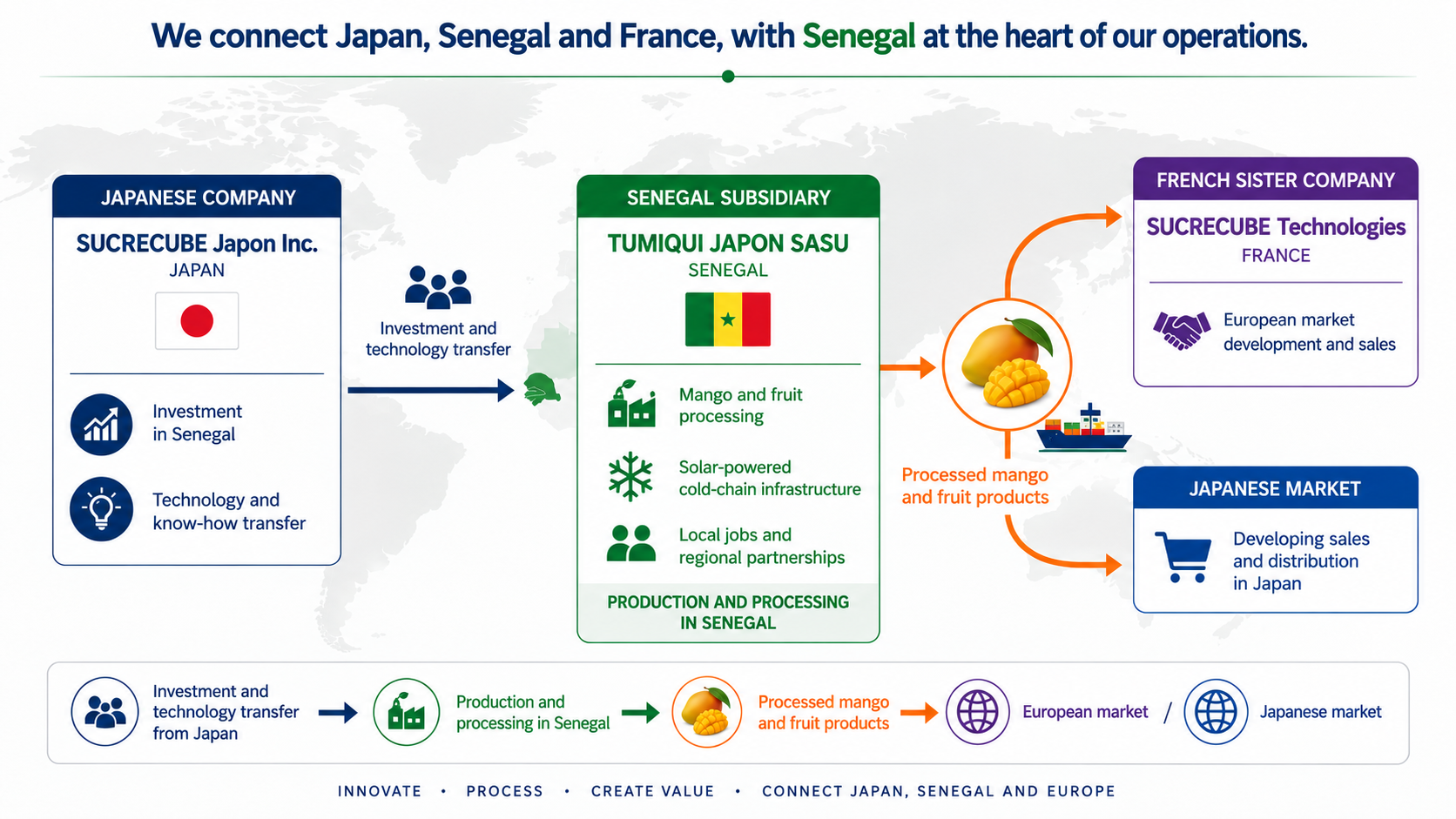
Path 2: processing and exportMango processing and export
Where we work
From Senegal, we have carried out orders from international organisations in The Gambia. In Benin, Togo, Djibouti and Côte d’Ivoire, proposals, bids and discussions are under way. Only established facts will be added, in turn, to the regions page.
Approach and sources
The TUMIQUI pyramid
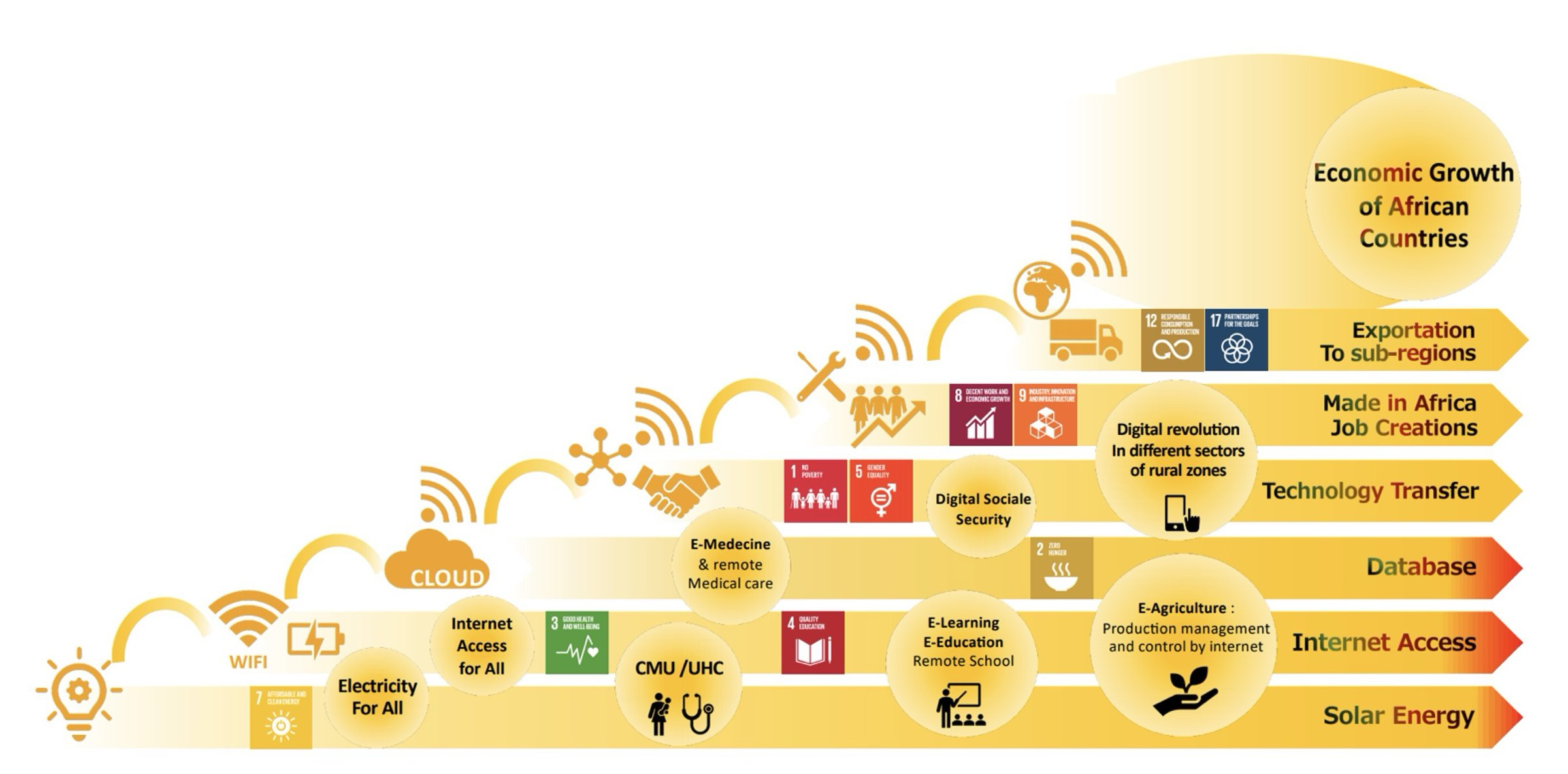
We call the idea set out at the top of this page the “TUMIQUI pyramid”. It was not drawn at a desk. It took shape through conversations with officials of the Senegalese government, with health posts in villages without electricity and with the people who live there.
| Level | Content |
|---|---|
| Top | The sustained development of African countries. Communities that, without depending on aid, educate themselves, work and raise the next generation by their own means |
| Middle | Social infrastructure. Health, education, administration, the economy, the flow of information |
| Base | Electricity and telecommunications |
Without electricity, medical equipment does not run. Without telecommunications, there is no distance learning and no way to check market prices. That is why we have always delivered electricity and telecommunications together. Once the base is in place, the night consultations at the health post, the video lessons in the classroom, the village cold room and the processing unit are built on top of it in turn. There is more than one path to the top. The base is always the same.
Sources of the figures
This is how the figures on this page and on other pages are counted, and where they come from.
| Figure | What is counted | Period and source |
|---|---|---|
| 147 units, 122 schools | TUMIQUI Smart Kits delivered for UNICEF in The Gambia, and the number of schools equipped. Contract signed directly between SUCRECUBE Japon and UNICEF | Ordered in 2025. Delivery, installation and training in spring 2026, completed in May 2026. Company delivery records |
| 45 units | TUMIQUI Smart Kits delivered for IOM in The Gambia | Company delivery records |
| 3 health posts | Health posts in Casamance equipped with a TUMIQUI Smart Kit under the JICA Biz programme | Selected in 2025, installed in 2026. JICA Biz project plan |
| More than 600 deliveries | Births assisted with electricity, including at night, in health posts equipped with a TUMIQUI Smart Kit | Cumulative since installation in 2019. Company count |
| About 50,000 tonnes a year | Mangoes lost after harvest in Senegal | Estimate for Senegal |
| 24 hours a day | The two Sandiara sites are designed to run on solar panels and batteries only, with no grid connection | Operating time by design. Site A opened in 2026, so its operating record is still short |
| 22 m³, about 15 kWh a day | Chilled volume of Site A and daily electricity consumption | 22 m³: equipment specification. About 15 kWh: an approximate company figure, which varies with outside temperature and load |