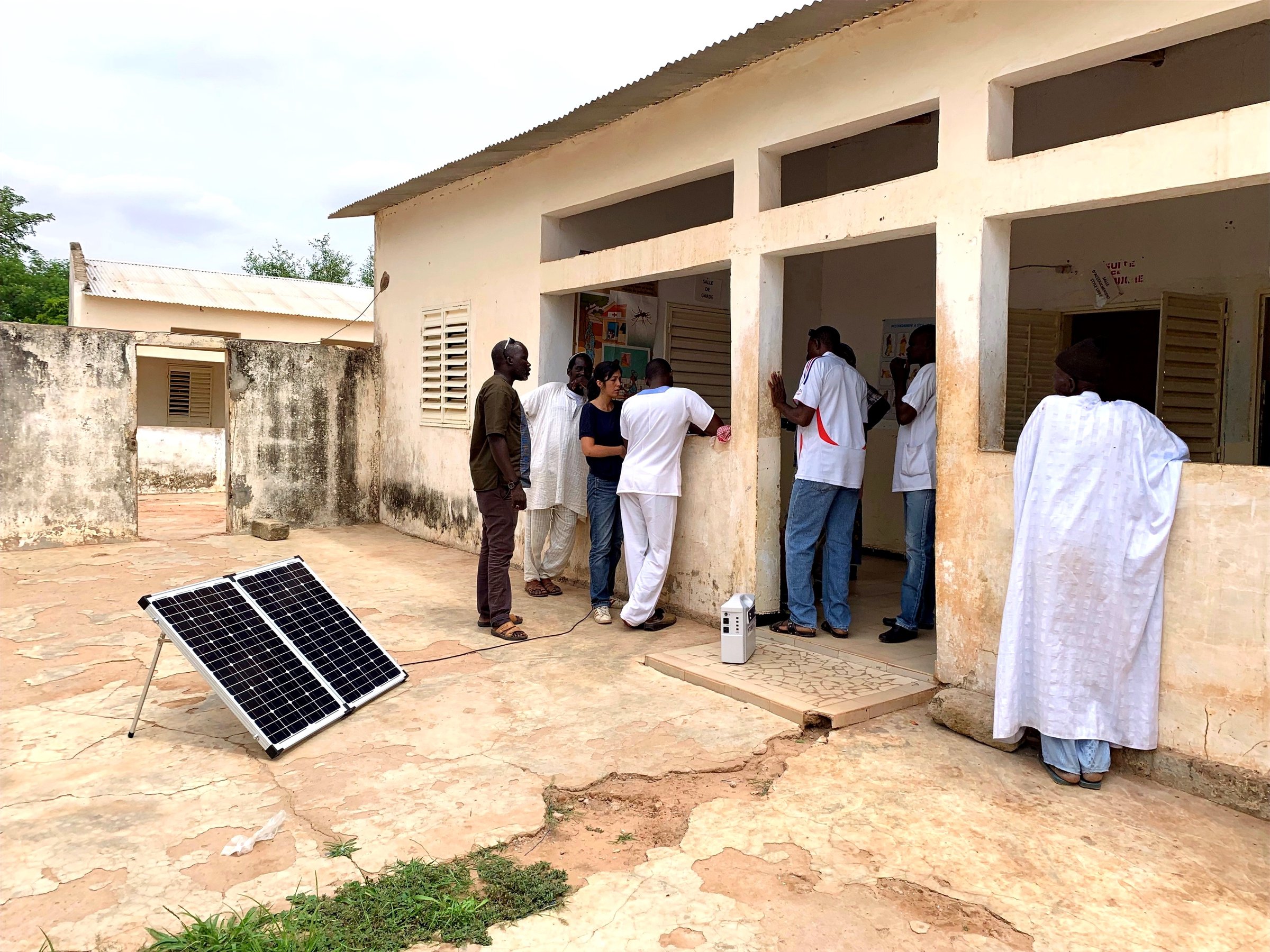
In 2025, SUCRECUBE Japon received an order from UNICEF for 147 TUMIQUI Smart Kits. The kits were delivered in 2026 to 122 schools in The Gambia. SUCRECUBE Japon signed the contract directly with UNICEF, without a consulting firm or trading house. Delivery, installation and training were carried out by its Senegalese subsidiary, TUMIQUI JAPON SASU.
The numbers
| Figure | Detail |
|---|---|
| 147 units, 122 schools | UNICEF Gambia. TUMIQUI Smart Kit delivered to 122 schools |
| 45 units | IOM (International Organization for Migration), The Gambia. 3 sites in the border area |
| 31% → 77% | Pass rate for the primary school leaving exam, the year after installation, at the first school equipped in Senegal |
| 10 health posts (2019) + 3 (2026, JICA Biz) | Senegal. 10 posts under the memorandum of understanding with the Ministry of Health, and 3 posts in Casamance under the JICA Biz programme |
| 2 sites, 24 hours | Solar cold storage sites in Sandiara, Senegal. Designed to run 24 hours a day on solar panels and batteries only |
| Institutional record | Detail |
|---|---|
| Memoranda of understanding with the Government of Senegal | Ministry of Health, Ministry of National Education, Ministry of Industry and Commerce |
| UN procurement | Registered vendor on the UNGM (United Nations Global Marketplace) |
| Local presence | Wholly owned subsidiary TUMIQUI JAPON SASU, Sandiara, Senegal |
Case 1. UNICEF Gambia: 147 units in 122 schools
In rural Gambia, schools have no electricity or face frequent power cuts. UNICEF chose the TUMIQUI Smart Kit for a programme bringing power and teaching videos to 122 schools. Before signing, UNICEF visited equipped schools in Senegal and reviewed the results and the operating arrangements, not only the equipment.
The contract was held by the Japanese company and the field work was done by the Senegalese subsidiary. Each school received a TUMIQUI Smart Kit and a television, and teachers were trained at handover. Delivery, installation and training took place in spring 2026 and were completed in May 2026. What counted was the record built in Senegal over several years, school by school, of what a powered television changes in a classroom.
Read the announcementRead the case study
Case 2. Health posts in Casamance: power, a printer and a television
Casamance, in southern Senegal, is a region surrounded by river and sea. At one health post, getting a single photocopy meant taking a boat to town. In 2025, under the JICA Biz programme of JICA (Japan International Cooperation Agency), SUCRECUBE Japon equipped three health posts in the region with a TUMIQUI Smart Kit, a Seiko Epson printer and a television. These three posts, equipped in 2026, follow the 10 health posts electrified in 2019 under the memorandum of understanding with the Ministry of Health.
The equipment is used every day the posts are open. The power is used for night consultations and deliveries. Documents are printed in the consultation room. Health education videos play on the television in the waiting area. In the health posts the company has electrified, more than 600 deliveries have taken place with electricity. A health post manager said: “We can work at night now.” The pairing of power and printer is still being tested at these sites.
Read the announcementRead the case study
Case 3. The two Sandiara sites: cold storage and processing on solar alone
In Senegal, an estimated 50,000 tonnes of mangoes are lost every year because there is nowhere to keep them cold. SUCRECUBE Japon built two cold storage sites in the Sandiara industrial zone, powered by solar panels and batteries only. Site A has 21 kW of solar and a 22 m³ cold room, kept cold on about 15 kWh a day. Site B has 35 kW of solar and 60 m³, with freezing and processing. Neither is connected to the grid. Both are designed to run 24 hours a day on solar panels and batteries.
Construction drew on a pilot programme of Japan’s Ministry of Economy, Trade and Industry. Today, under a pilot programme of Japan’s Ministry of Agriculture, Forestry and Fisheries (MAFF), the company processes mangoes with the women’s group GIE DIAMI SANDIARA. The products are being promoted in Japan and France. Sample shipments to Japan have begun. The first customer of the digital kiosk at Site A was a secondary school student who came in for a cold drink on the way home.
Read the announcementRead the case study
Awards and recognition
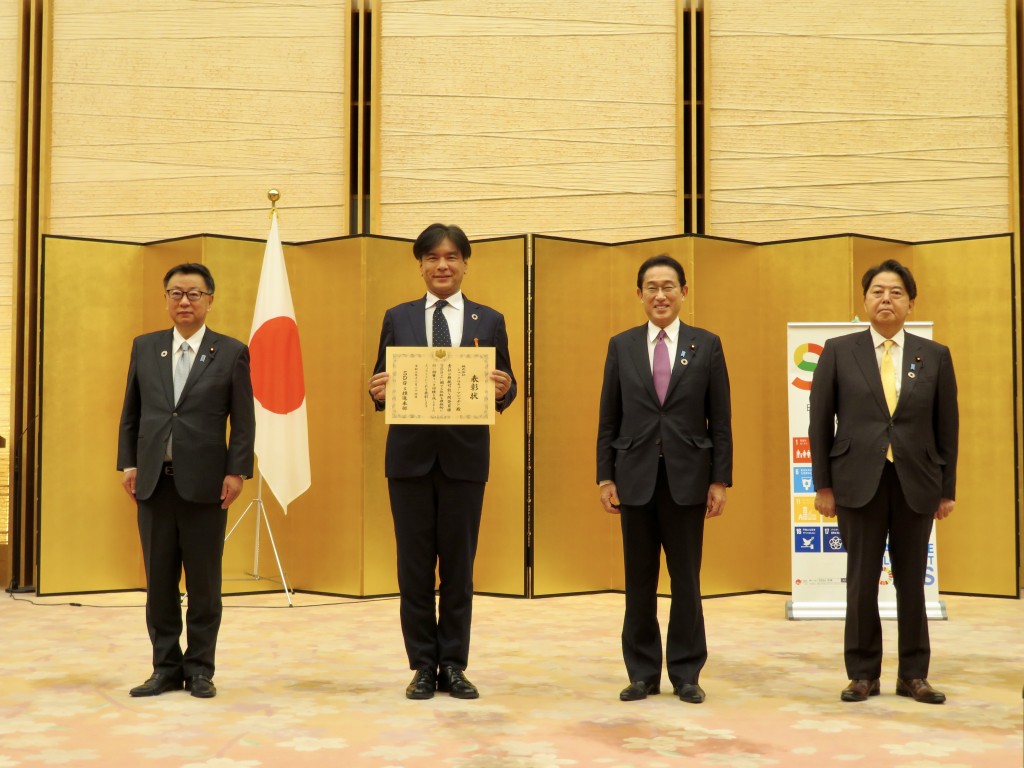
| Year | Award |
|---|---|
| 2026 | Selected in the ESG and Impact category of Toyo Keizai’s Sugoi Venture 100, 2026 |
| 2023 | Iwasa Award, 2nd SDGs Japan Scholarship, Economy category (The Asahi Shimbun) |
| 2022 | Featured in Forbes JAPAN’s September 2022 issue, Impact 100 |
| 2021 | Special Award, 5th Japan SDGs Award |
| 2020 | Excellence Award, 3rd Nikkei Social Business Contest (Nikkei Inc.) |
Detailed pages for each case will be published in turn. For a deployment of the same kind, please state the number of units, the intended use and the region.