In Senegal, an estimated 50,000 tonnes of mangoes are lost every year. The harvest is concentrated in four months, from May to August. The fruit ripens all at once, and there are not enough places to cool it or process it.
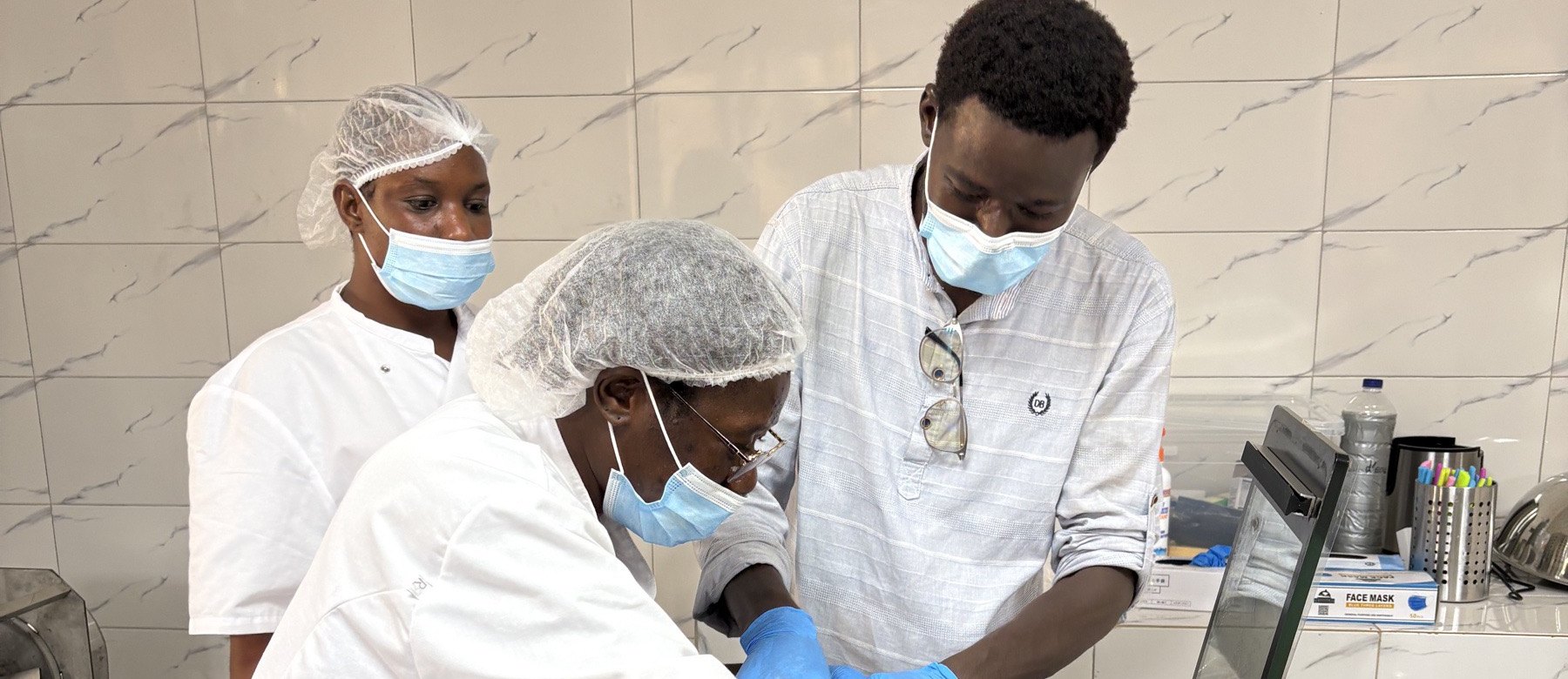
SUCRECUBE Japon is building the chain that turns these mangoes into purée, freezes it and delivers it to Japan and Europe. Processing is done by the women’s group GIE DIAMI SANDIARA in Sandiara, Senegal. Chilling and freezing are done at the company’s solar cold storage sites. The work is carried out as a pilot project of Japan’s Ministry of Agriculture, Forestry and Fisheries (MAFF). The products are being promoted in Japan and France. Sample shipments to Japan have begun.
The roles of Japan, Senegal and France
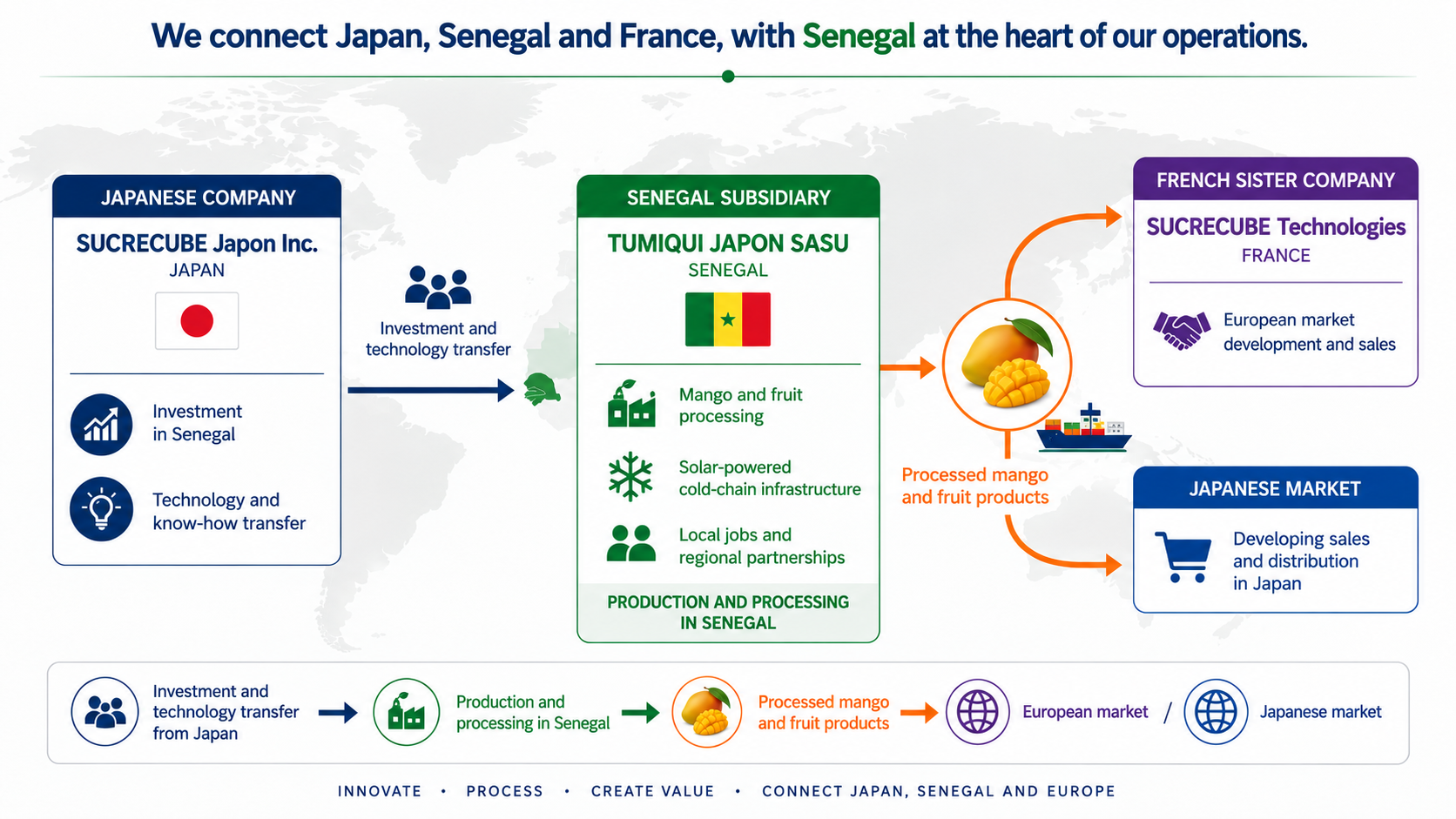
SUCRECUBE Japon, the Japanese company, provides investment in Senegal and technology transfer: processing methods, equipment and management. TUMIQUI JAPON SASU, the Senegalese subsidiary, carries out mango production and processing with the women’s group GIE DIAMI SANDIARA. SUCRECUBE Technologies, the sister company in France (outside the consolidation scope), develops the European market and handles sales. In Japan, the aim is sales and distribution. At present, the work consists of sample shipments and promotion.
Senegalese mango
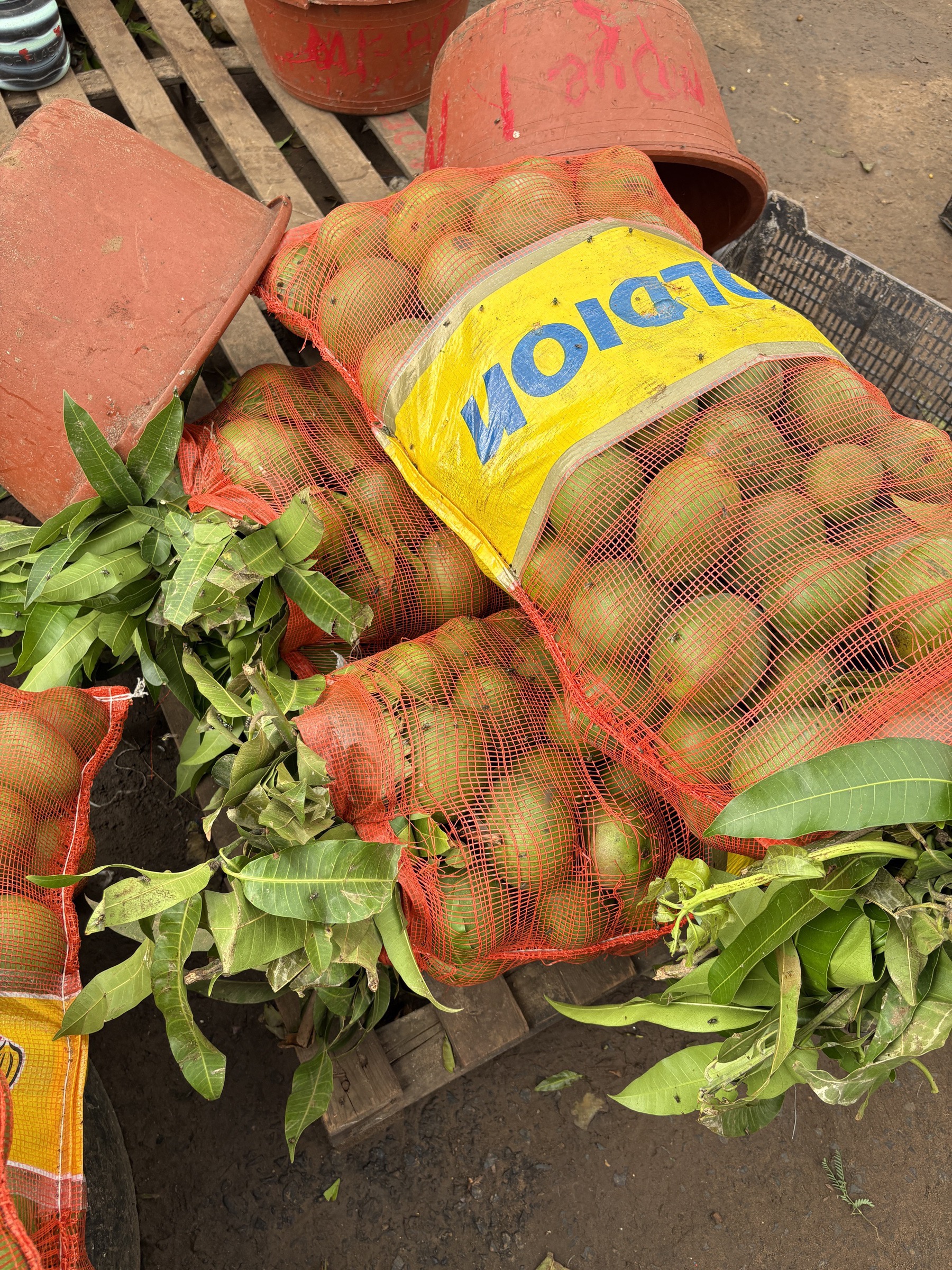
The most widely grown variety in Senegal is Kent. It is known for its balance of sweetness and acidity, its aroma and its flesh with little fibre. At harvest the markets overflow, prices fall, and unsold fruit rots under the trees. Cooled and processed, the mango becomes a product that sells after the season.
Processing steps
| Step | Content |
|---|---|
| Receiving and sorting | Only ripe fruit is accepted. Damaged fruit is removed |
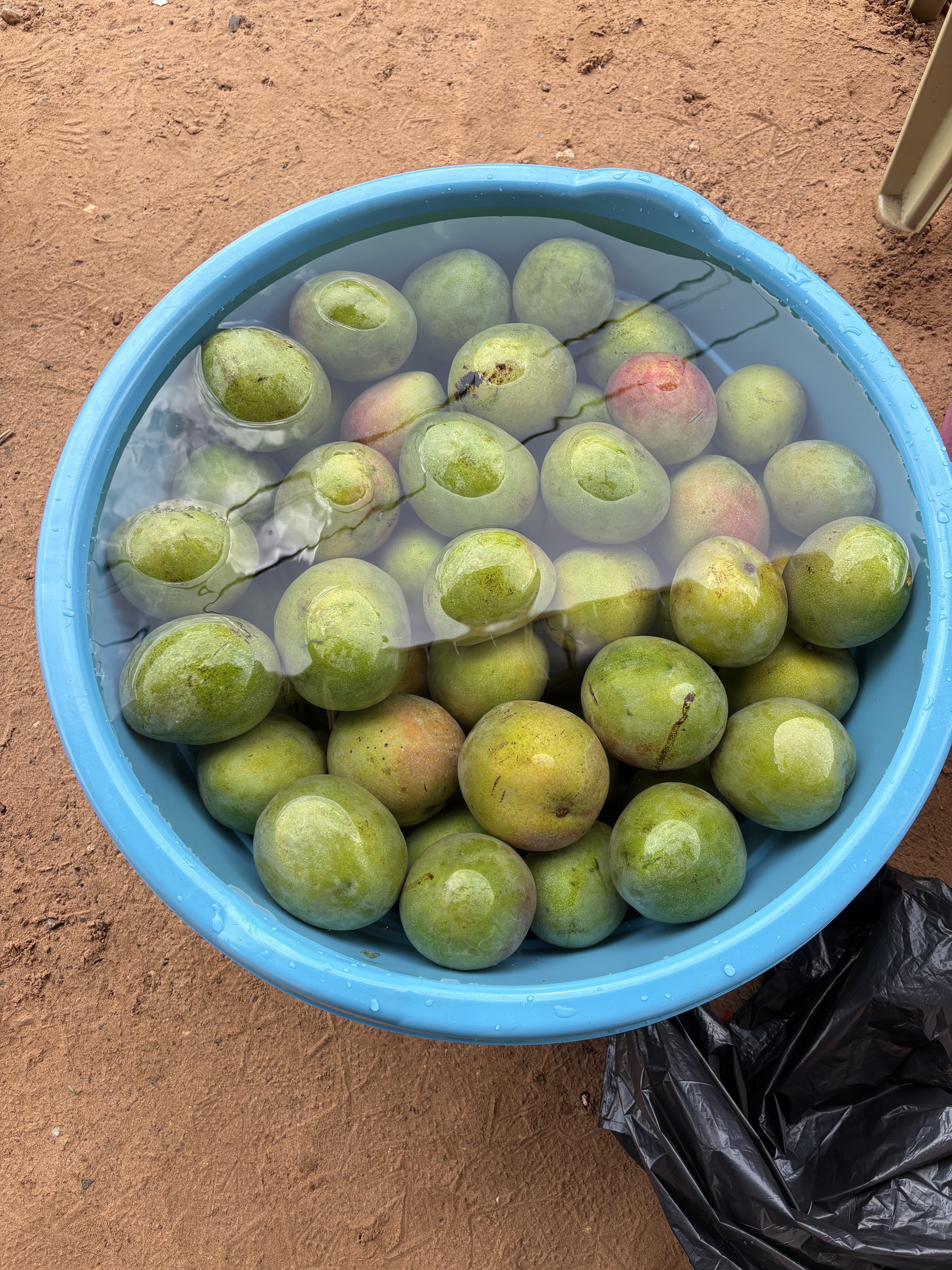
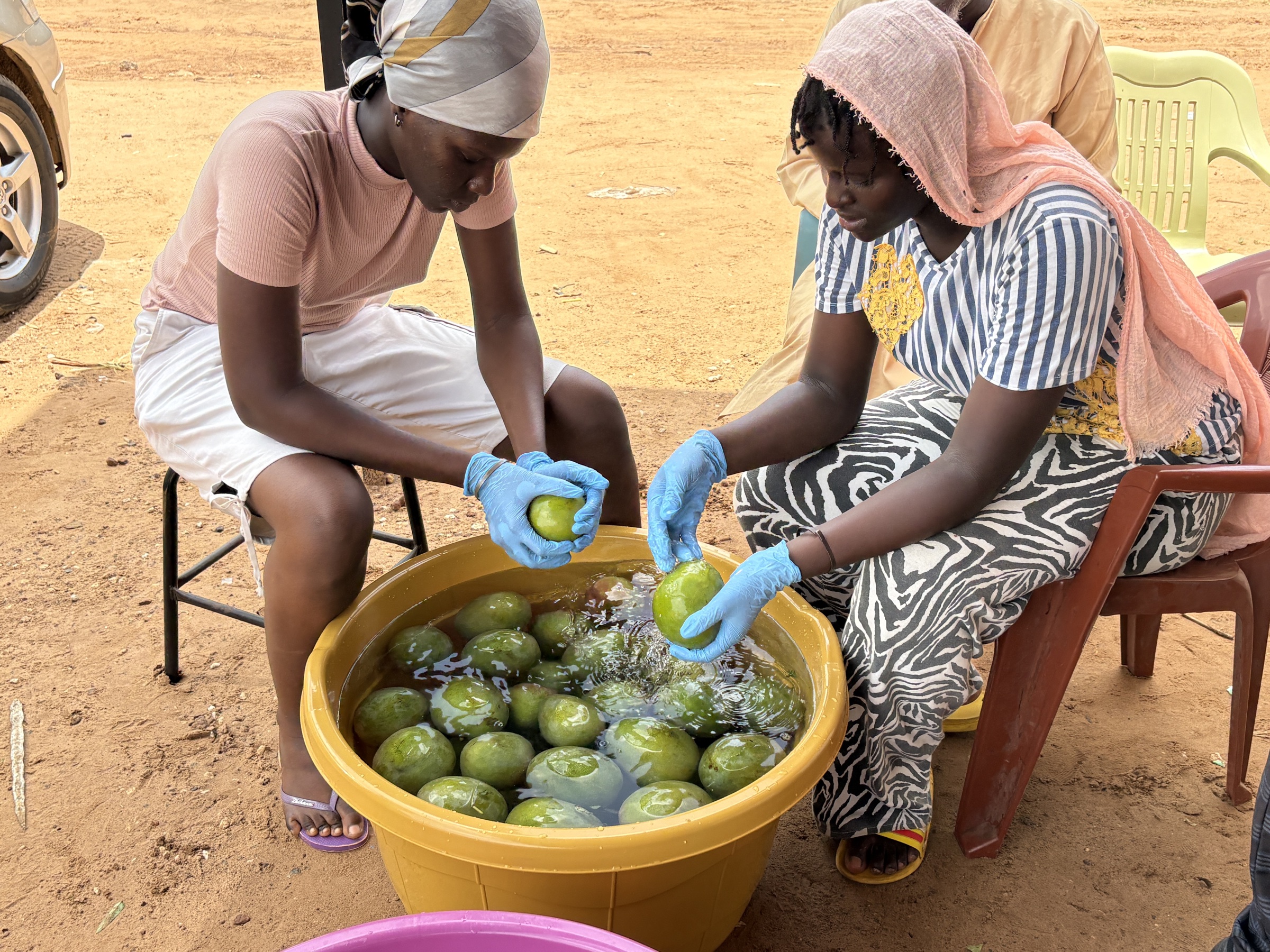
| Washing | The fruit is washed and sanitised |
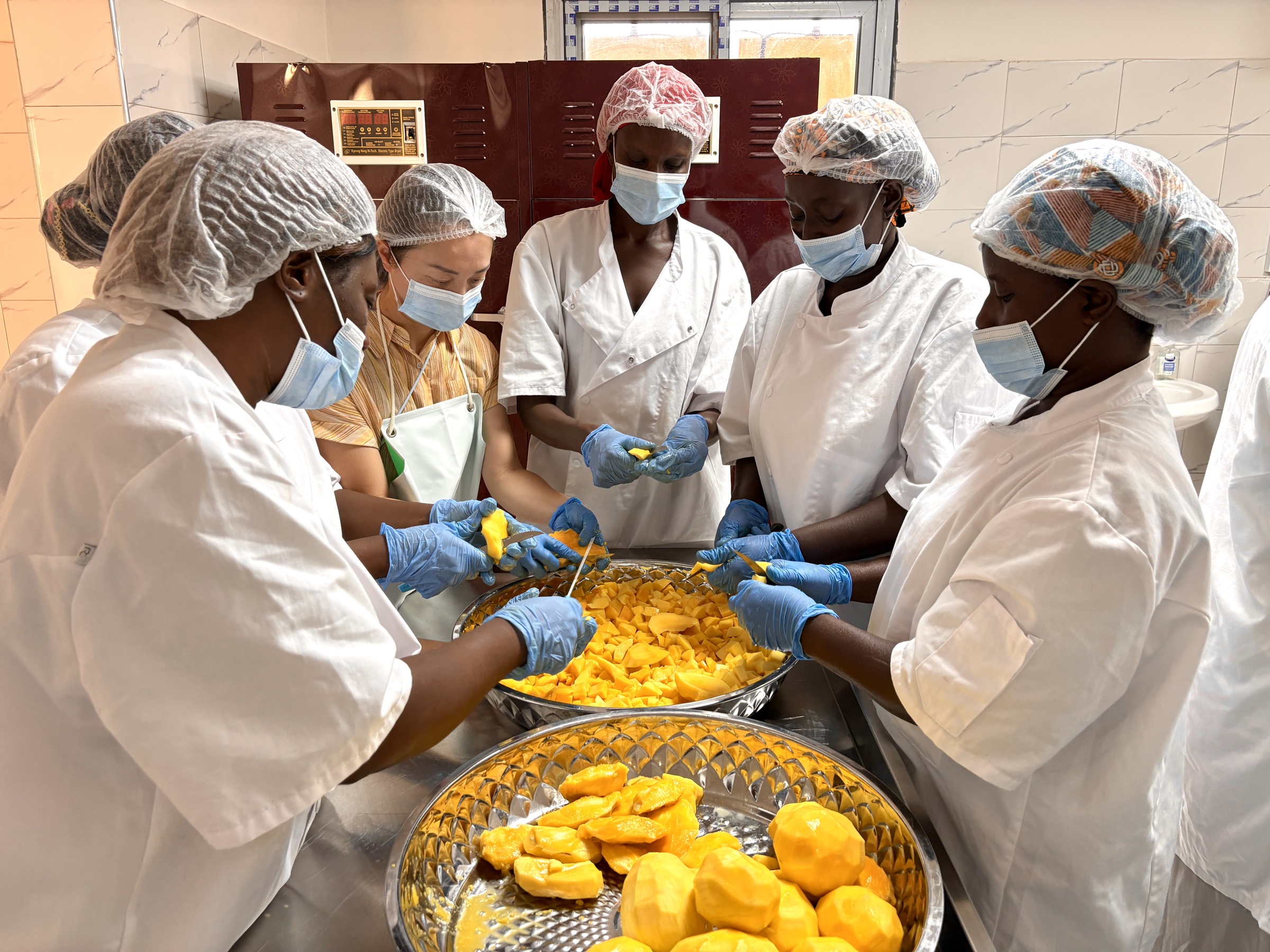
| Peeling and stoning | By hand |
| Pulping and sieving | The flesh is turned into purée |
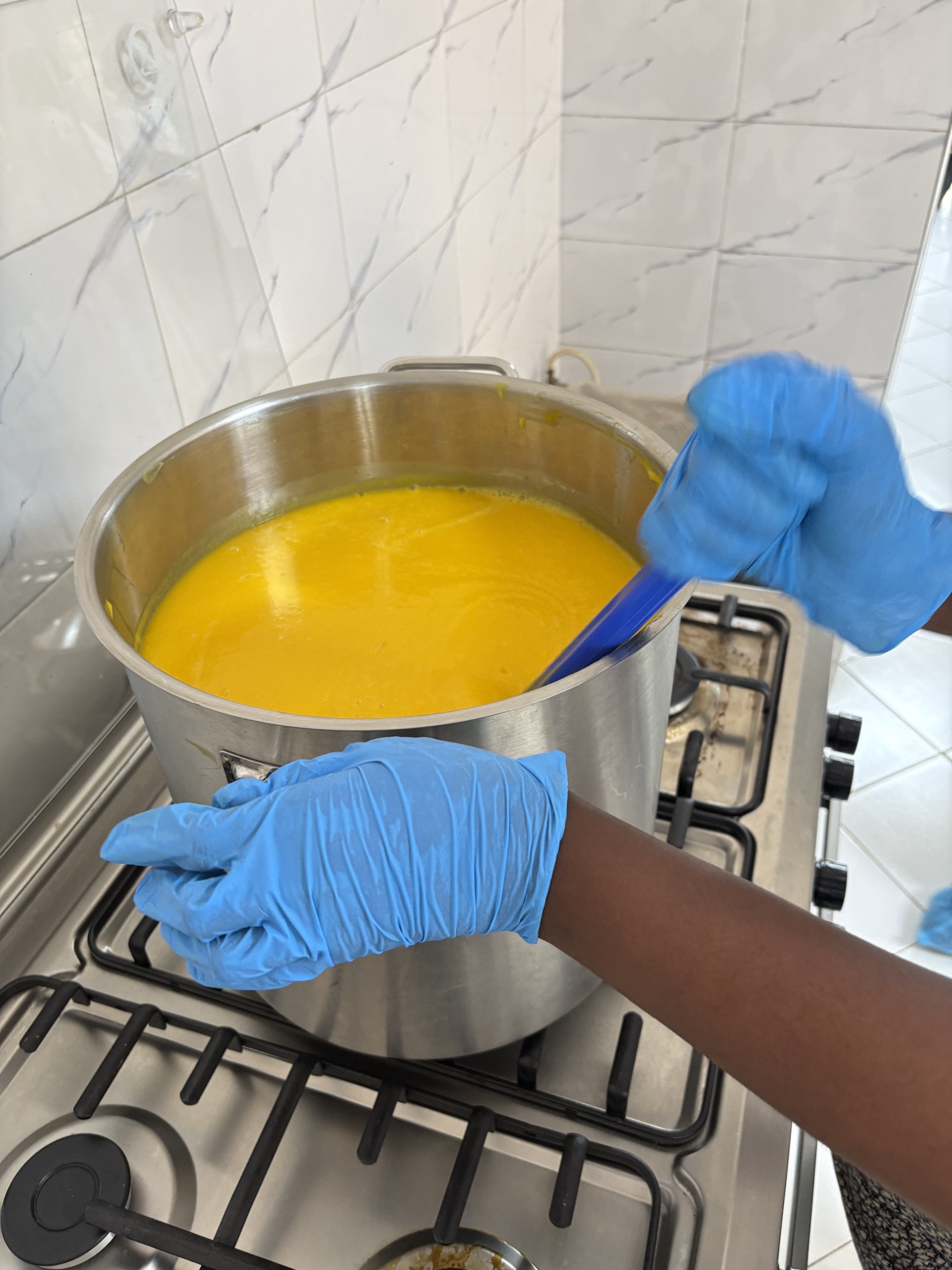
| Heat treatment | The purée is heated to make it safe. This is the key hygiene step |
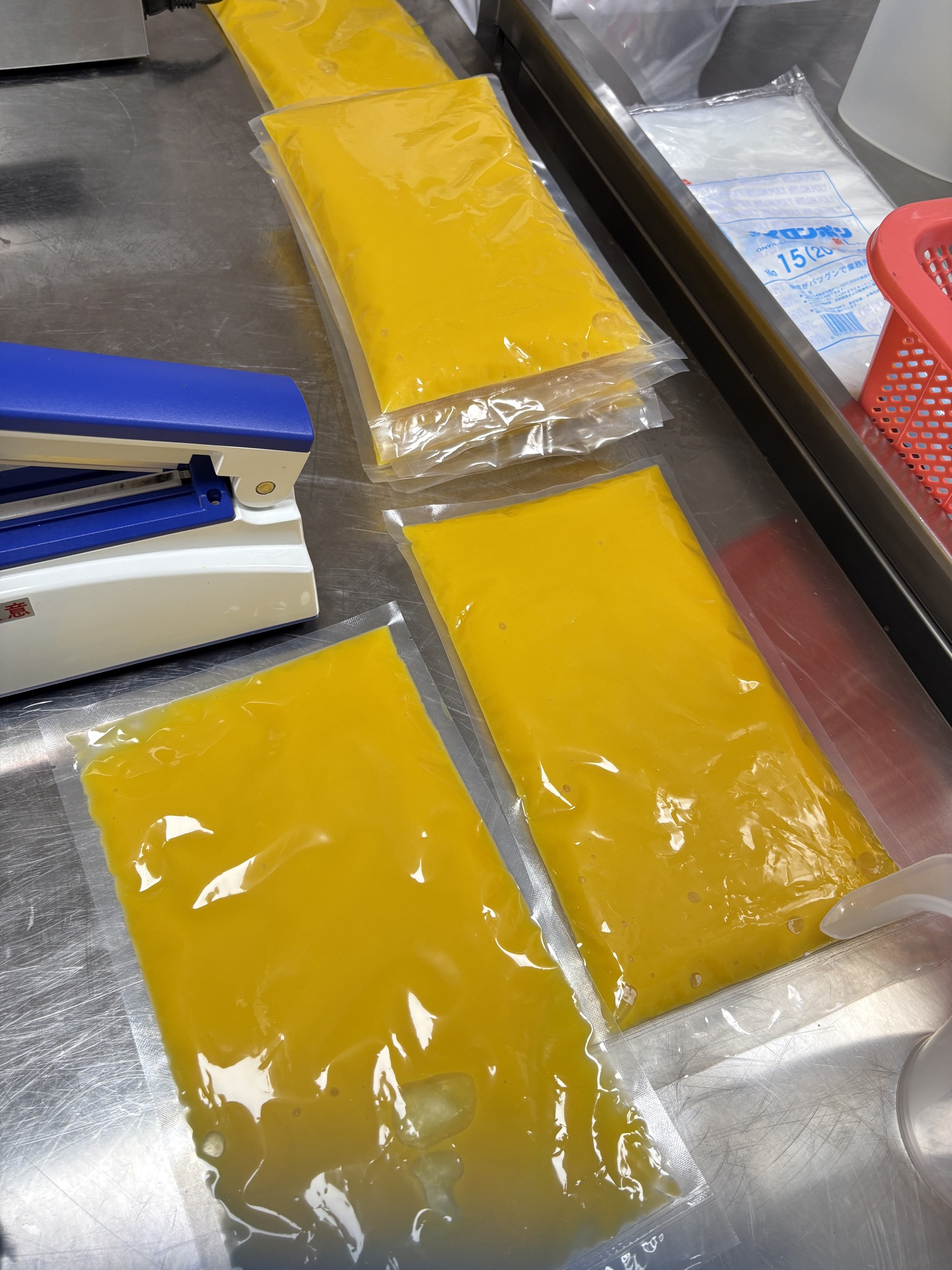
| Cooling and filling | The purée is cooled, then filled into pouches and vacuum sealed |
| Pasteurisation and cooling | The sealed pouch is heated a second time, then cooled |
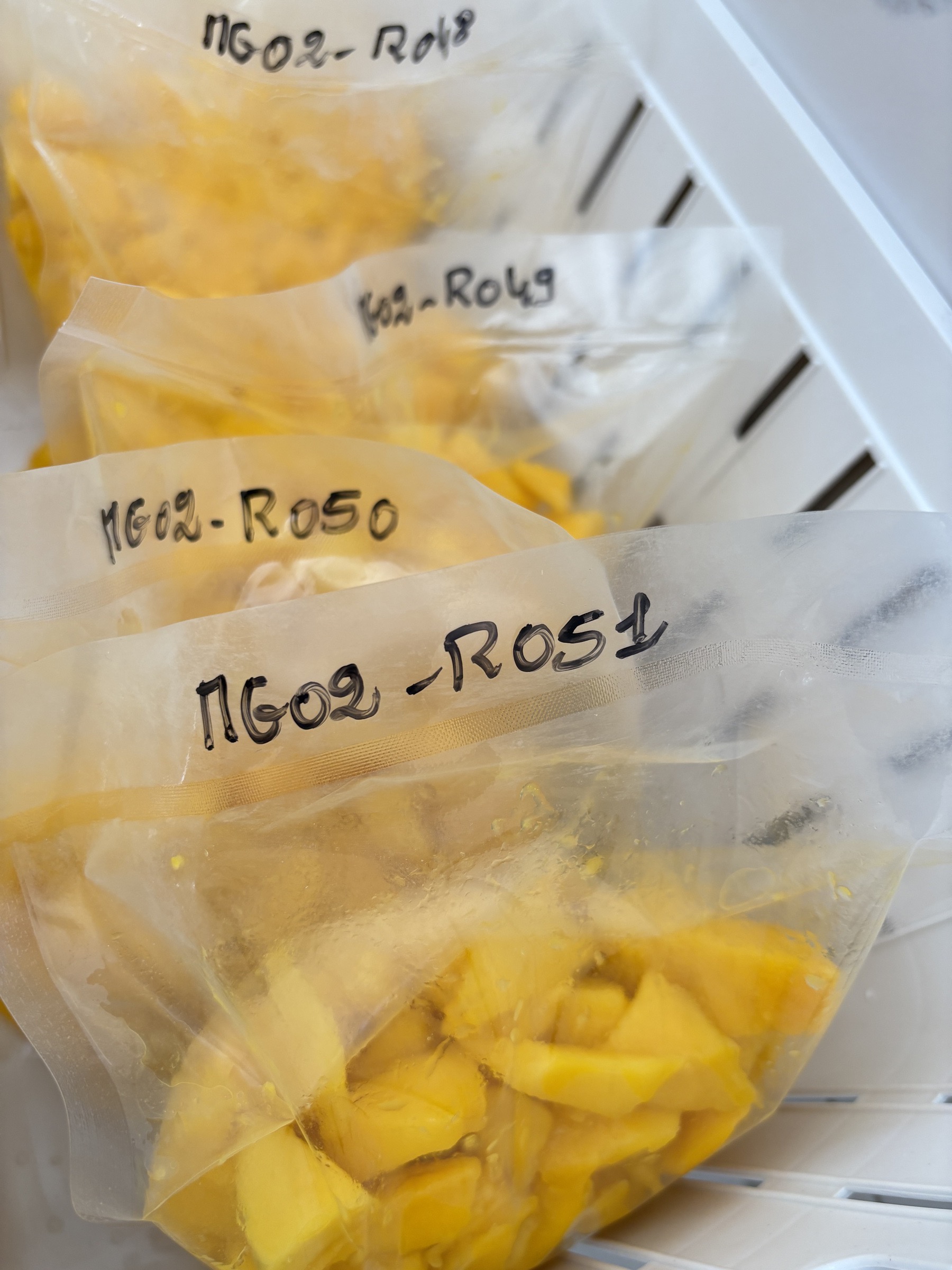
| Frozen storage | In the freezer at the solar cold storage site |
| Export | Shipped frozen to Japan and Europe |
Heat treatment is done in two stages, first on the flesh and then on the sealed pouch. The procedure was set with Okipota, a mango dessert specialist in Okinawa (Royal Entertainment Co., Ltd.).
Hygiene principles
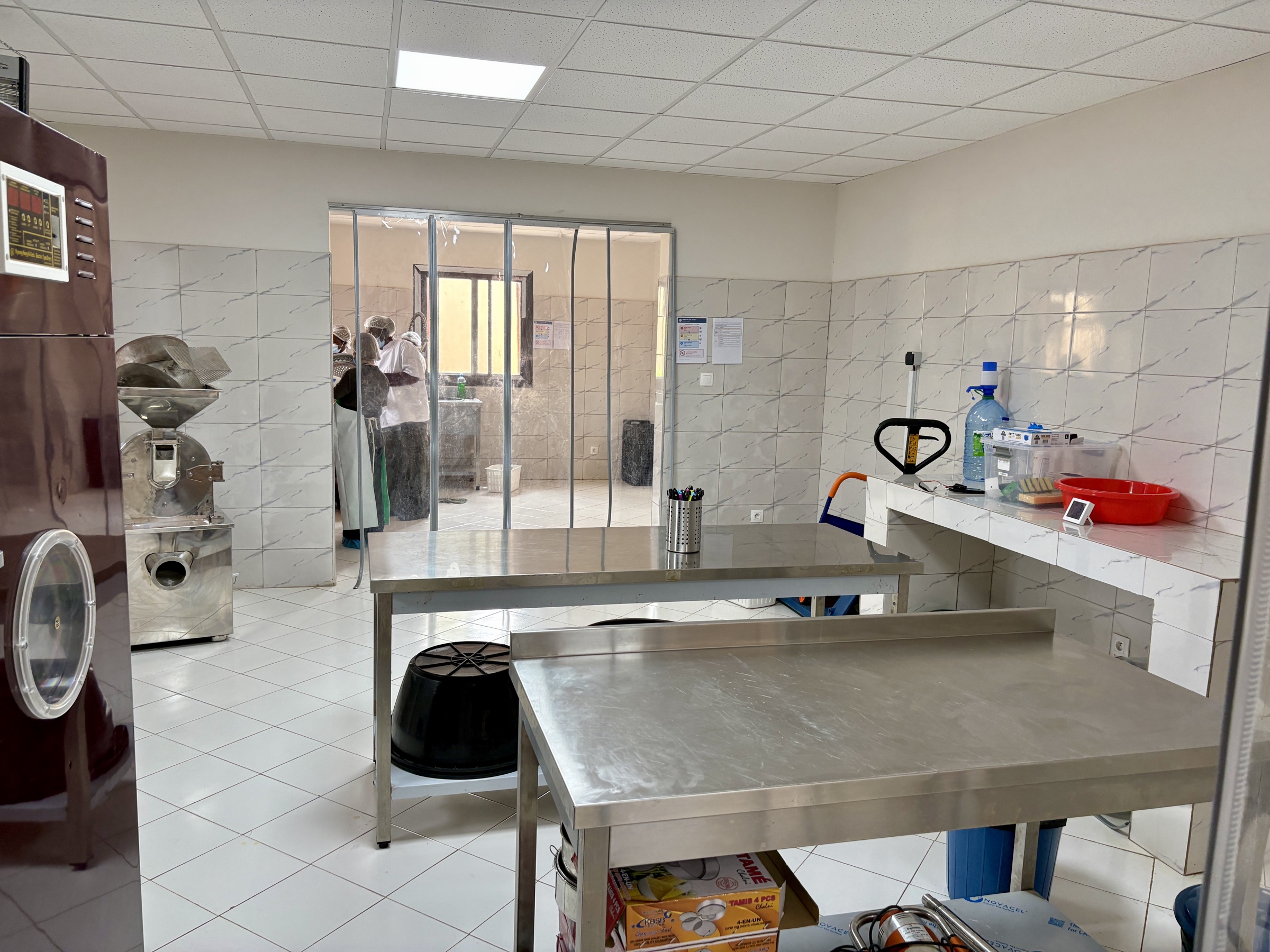
The workshop is laid out as a one-way flow, from the fruit entrance to the product exit. Raw material and finished product never cross. At each step the temperature, the time and the operator are recorded. The records of one batch fit on a single sheet, and the decision to ship is taken from that sheet. Critical control points are defined according to the HACCP method, and compliance with European Union hygiene requirements is being verified.
Why a women’s group
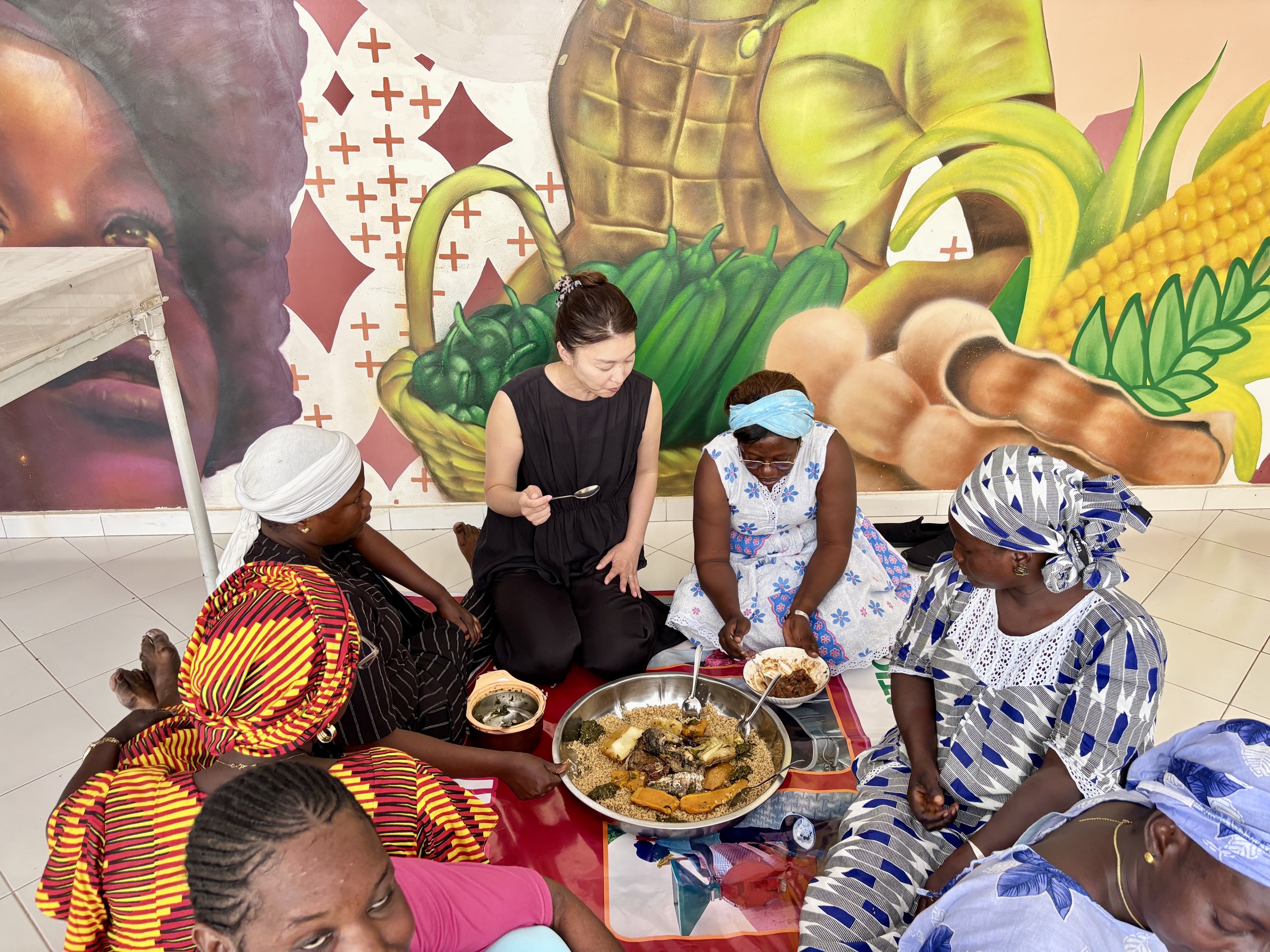
Processing is done by the women’s group GIE DIAMI SANDIARA in Sandiara. The group carries out the day-to-day production and quality control. SUCRECUBE Japon provides the equipment and the hygiene methods. The company decided not to stop at installing machines. Processing takes place at the group’s premises, and training continues until its members can reproduce the steps and the hygiene rules on their own. Practice was placed before theory, because fresh fruit is only available in the harvest season.
Why the cold chain runs on solar
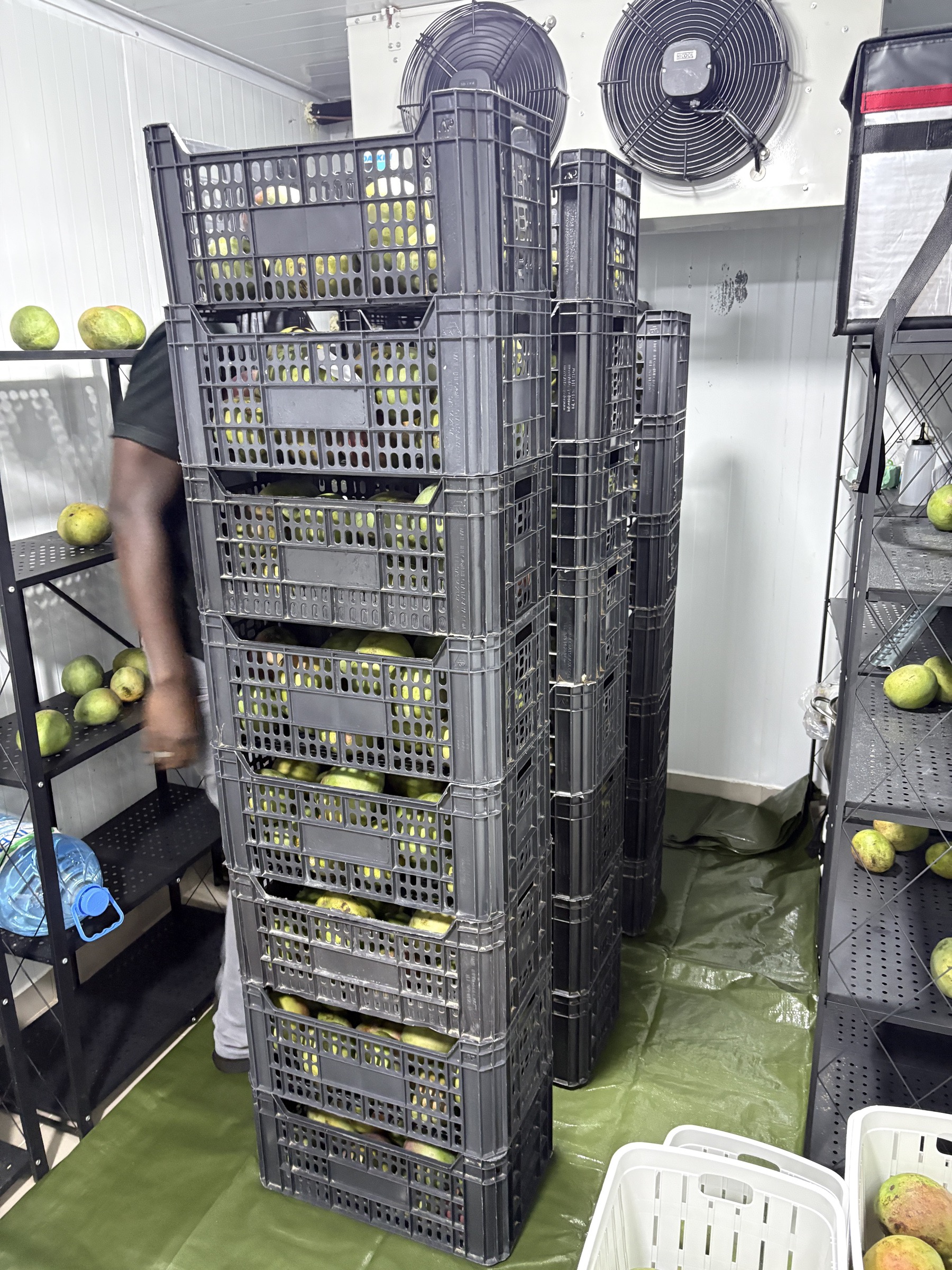
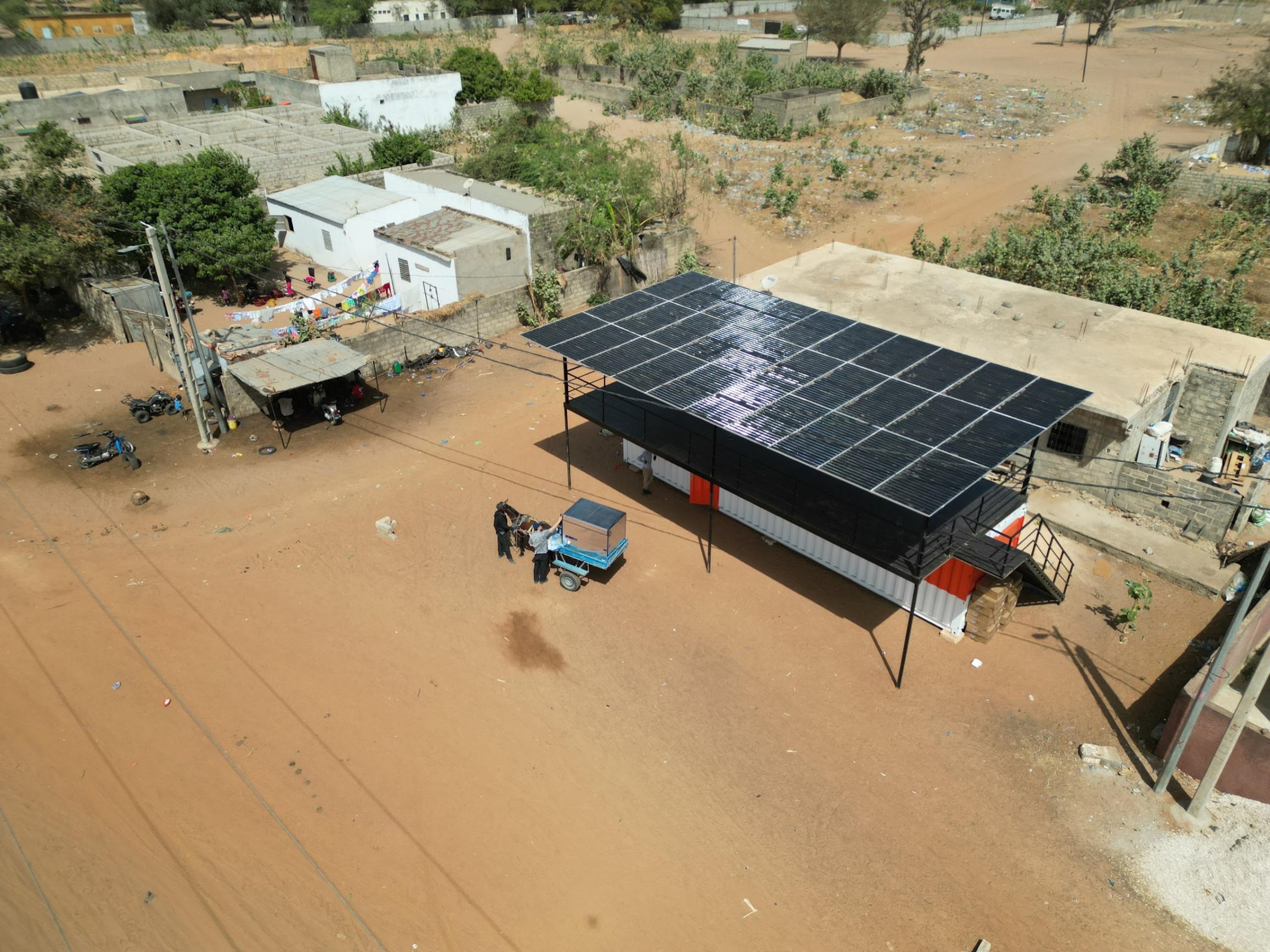
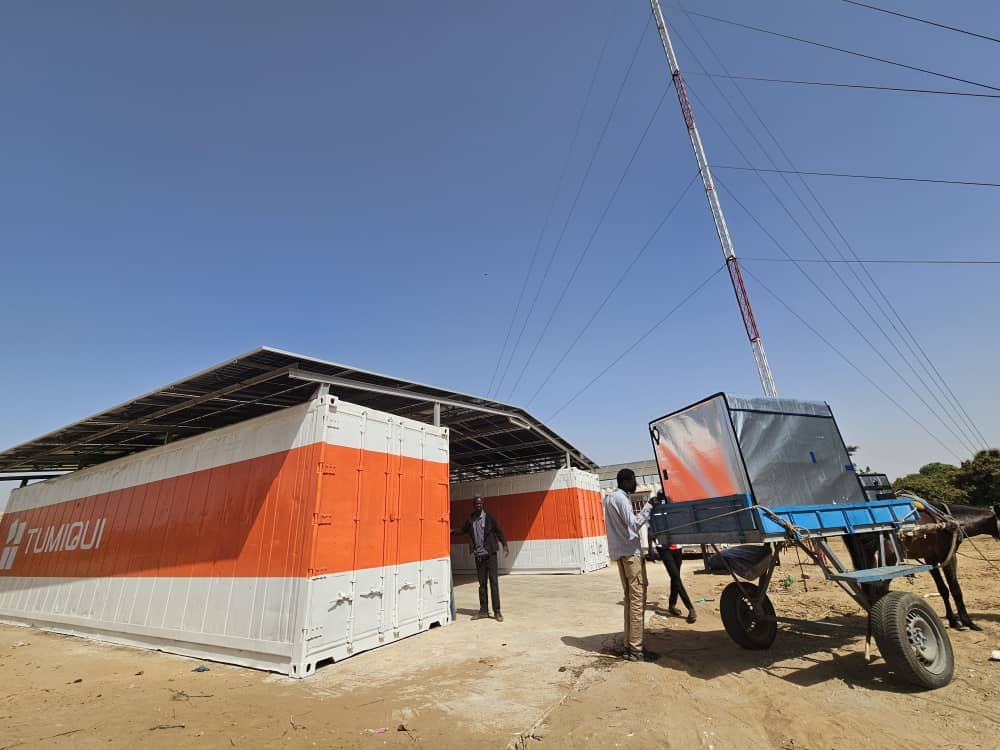
Many places in Sandiara are not connected to the grid. SUCRECUBE Japon built two cold storage sites there that run 24 hours a day on solar panels and batteries alone. Site A has 22 m³ of chilled storage, and Site B has 60 m³ of chilled and frozen storage. The purée is frozen at Site B. Even without a grid, the cold chain is kept unbroken from harvest to export.
The product: TUMIQUI Délice
The purée is presented under the name TUMIQUI Délice to professionals in Japan and France for evaluation: food trading companies and restaurant operators in Japan, and pastry shops in France. Desserts based on the purée are being trial-produced with Okipota.
Enquiries
SUCRECUBE Japon welcomes requests for samples, enquiries about using the purée as an ingredient for confectionery or drinks, and enquiries about import. Please state the intended use, the quantity and the specification required. We will propose a supply plan matched to the harvest season.