SUCRECUBE Japon signs a comprehensive MOU with Senegal's Ministry of Industry and Commerce on renewable energy and cold storage infrastructure at industrial hubs
On 25 August 2025, SUCRECUBE Japon (Koichi SATO, CEO) formally signed a memorandum of understanding (MOU) with the Ministry of Industry and Commerce of Senegal (MINCOM, Minister Dr. Serigne Guèye Diop). The MOU covers the deployment of solar power plants and of cold chain and processing infrastructure for agricultural products. It was signed at the Senegal Business Forum, held on the occasion of Senegal’s National Day at Expo 2025 Osaka, Kansai, Japan.
The MOU is a comprehensive cooperation framework to expand renewable energy and strengthen food value chains, in line with the Government of Senegal’s “Senegal 2050” plan. It aims to combine a stable power supply from solar generation with an integrated system for cold storage, processing and export. The goal is to reduce agricultural losses, raise rural incomes, create jobs and address climate change at the same time.
The Government of Japan (Ministry of Foreign Affairs, METI, MAFF, JETRO and others) has shown strong interest in this cooperation. It is a starting point for partnerships with Japanese private companies and international organisations. The signing strengthens the competitiveness of Senegalese industry. It also has strategic importance as a model of cooperation by Japanese companies in Africa.
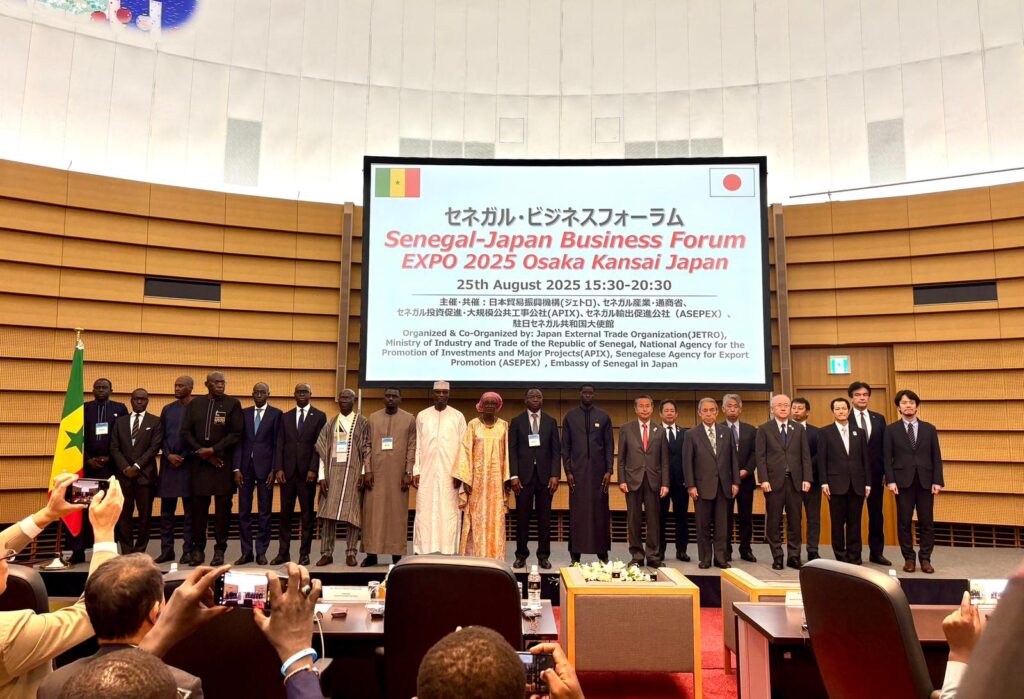
The President of Senegal also attended
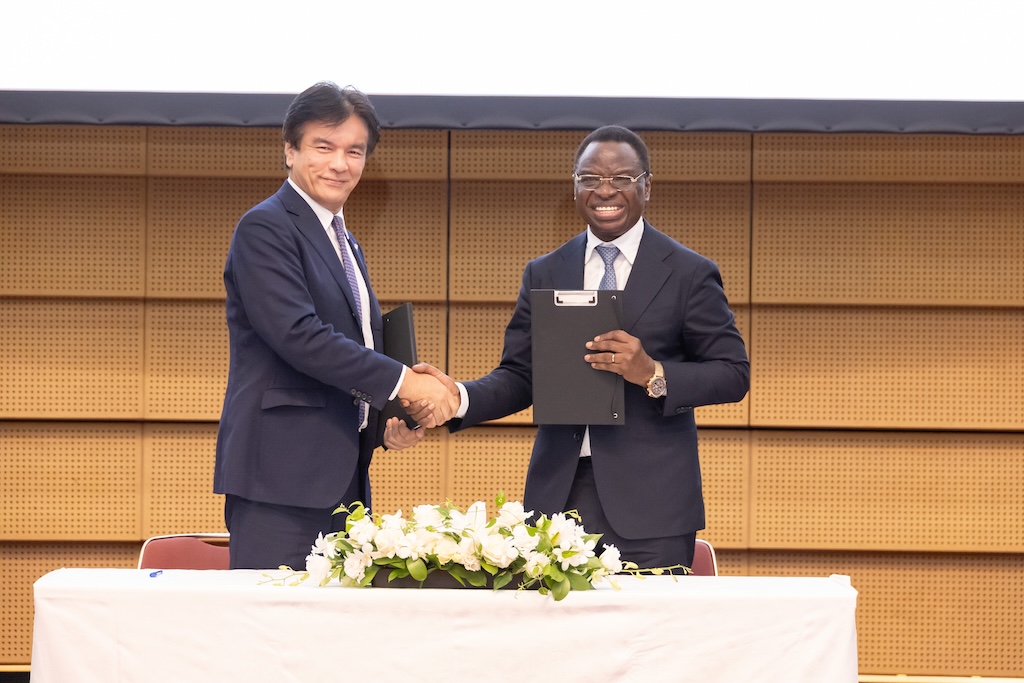
Towards stronger relations
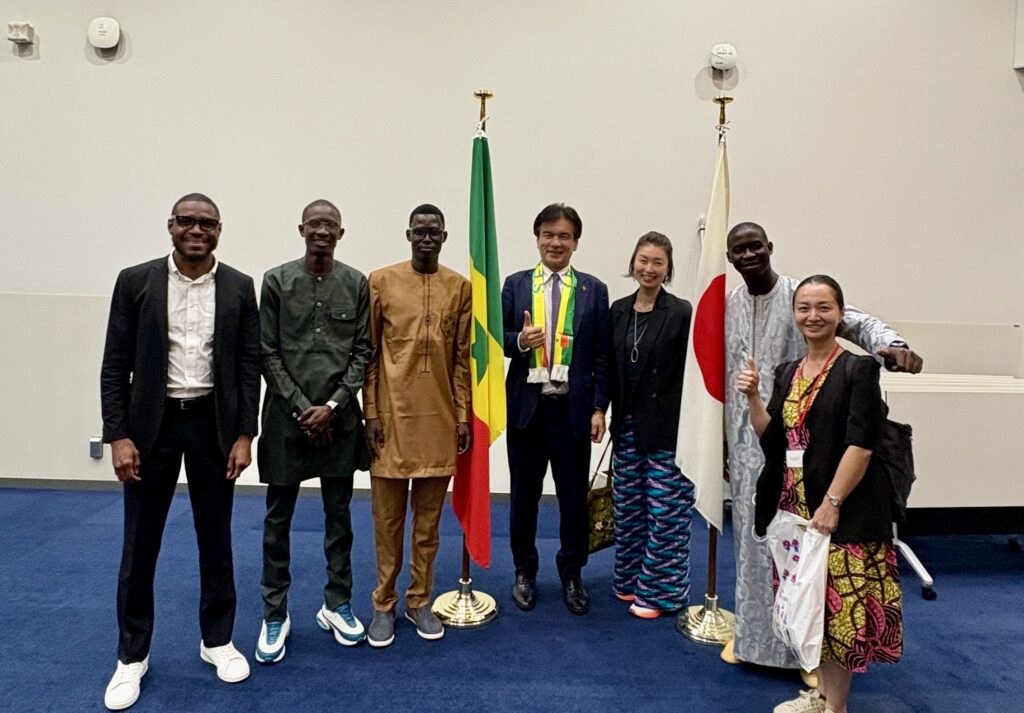
Made possible by teamwork between the two countries
Background
In recent years, rapid urbanisation and population growth have made industrialisation and a stronger food supply system national priorities for Senegal. 3 points are considered especially important.
- Lack of a stable power supply
At the 8 industrial hubs and agropoles, power shortages and an unstable supply hold back business activity and the development of agro-processing. - Post-harvest loss of agricultural products
For example, about 450,000 tonnes of onions and 350,000 tonnes of potatoes are produced each year. Because cold storage is lacking, large quantities are discarded and dependence on imports continues. - Export competitiveness
Mangoes, root vegetables and other produce have high export potential. However, weak storage and processing infrastructure prevents them from creating enough added value.
In response, the MOU sets out a framework for Japan and Senegal to address these issues together, built on renewable energy (solar power) combined with food cold storage and processing infrastructure.
Main pillars of the MOU
The MOU is promoted jointly by the Ministry of Industry and Commerce (MINCOM) and the Company. It focuses on the following areas.
- Strengthening industrial hubs with renewable energy
- Introduce renewable energy, mainly solar power, at the 8 industrial hubs and agropoles.
- Strengthen the base for manufacturing and agro-processing with a stable energy supply.
- Building food cold storage and processing infrastructure
- Extend the shelf life of onions, potatoes, mangoes and other produce with cold stores and modular units.
- Raise export competitiveness and farm income through processing (for example mango puree and root vegetable chips).
- Export growth and trade promotion
- Support higher exports of Senegalese agricultural products and processed foods.
- Target Japan, the EU and the Middle East in particular, and raise the international presence of Senegalese products.
- Industrialisation and job creation
- Create new jobs through the projects and support local economies.
- Focus on technology transfer and human resource development to build a sustainable industrial base.
- Public-private coordination between Japan and Senegal
- Combine policy, financial and technical support, based on close cooperation with the Government of Japan (MAFF, METI, MOFA, JETRO and others).
- Senegalese and Japanese companies work together and further strengthen trust between the two countries.
Expected impact
The MOU is expected to have the following effects.
- Economic
- Stabilise the distribution of agricultural produce on the scale of several hundred thousand tonnes, by strengthening the storage and processing of onions, potatoes, mangoes and other products.
- Stabilise domestic market prices and replace imports, which directly raises farm incomes.
- Create new sources of foreign currency through higher exports of processed products.
- Environmental
- Introduce renewable energy (mainly solar) to provide a sustainable power supply at Senegal’s industrial hubs.
- Reduce greenhouse gas emissions significantly through less food loss.
- Social
- Create several hundred to a thousand new jobs through the projects.
- Support local economies and social stability by expanding job opportunities, particularly in rural areas and for women and young people.
- Promote technology transfer and human resource development to build a sustainable industrial model rooted in the community.
- International cooperation
- Present a model of international cooperation in which the Governments of Japan and Senegal and private companies work together.
- Highlight the leading partnership between Japan and Senegal in Africa through presentations at international events such as TICAD and the Osaka Expo.
Next steps
- Stronger partnerships with the Government of Japan, international organisations and private companies
Building on this MOU, the Company will expand multi-layered public-private and private-private partnerships. It will promote sustainable development in Senegal’s industry and agriculture. - From Senegal to West Africa
Based on the model in Senegal, the Company will consider expansion to neighbouring countries and across West Africa. It will contribute to regional food security and industrial competitiveness. - A deeper co-creation business model
The core is a value chain that links energy, cold storage and processing, and logistics. The Company will strengthen co-creation with major Japanese companies and local partners and establish a sustainable “African industrial model”.
Conclusion
The signing of this MOU with the Ministry of Industry and Commerce is a new starting point for the Company. It will work with public and private partners in Japan and Africa to build a sustainable future together. A co-created value chain covering energy, agro-processing and logistics can extend across West Africa. It can support both food security and industrial development.
The Company will use this MOU as the basis for co-creation with the Government of Senegal. Alongside public-private cooperation in both countries, it will also pursue the private-private partnership with Japanese companies announced at TICAD 9, under “Made with Japan”.