Co-creating with Japanese technology and 4 major companies to make Senegalese agriculture a global industry
The project has also been selected for the “FY2023 (Reiwa 5) Supplementary Budget Subsidy for Future-Oriented Co-Creation Projects with the Global South (Survey to Promote the Overseas Expansion of Infrastructure by Japanese Companies)” of the Ministry of Economy, Trade and Industry (METI). It is carried out in close partnership with the Government of Senegal. The trust that one start-up built on the ground attracted the technology of major Japanese companies and gained the support of the state. The Company sees this as a new role model for co-creation in Africa.
The start of co-creation: 7 years of trust made this partnership possible
Senegalese mangoes are organic and taste remarkably good. However, much of the crop lost its value before reaching the market because there was no way to keep it cool. Beyond mangoes, post-harvest loss across all agricultural products reaches several hundred thousand tonnes per year. To address this serious issue, the Company launched this project in co-creation with Japanese industry.
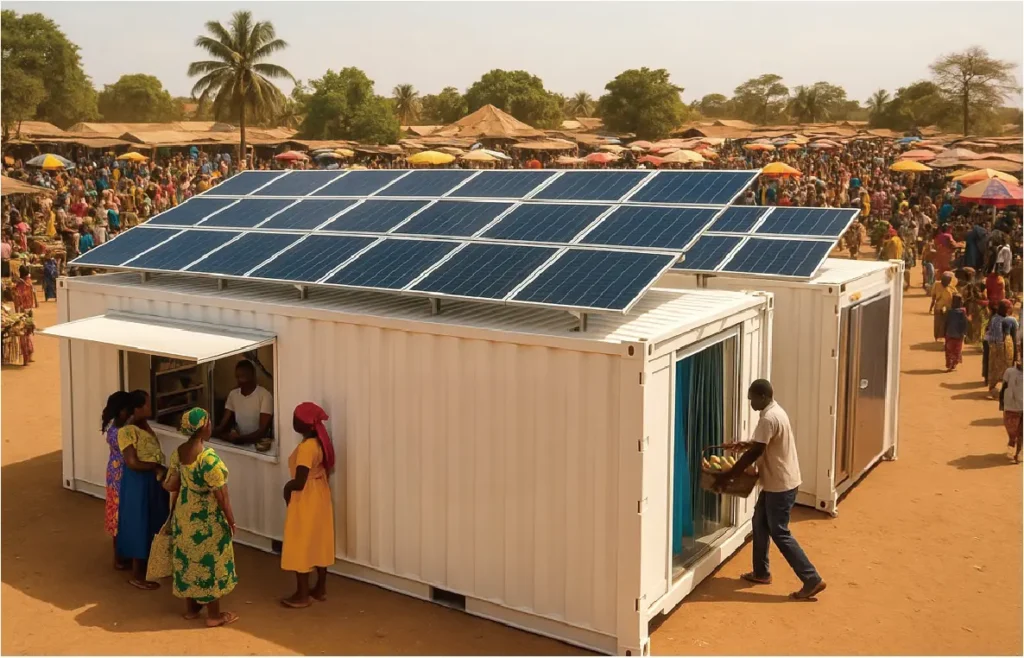
Figure: concept of a solar-powered cold store, food processing and digital KIOSK
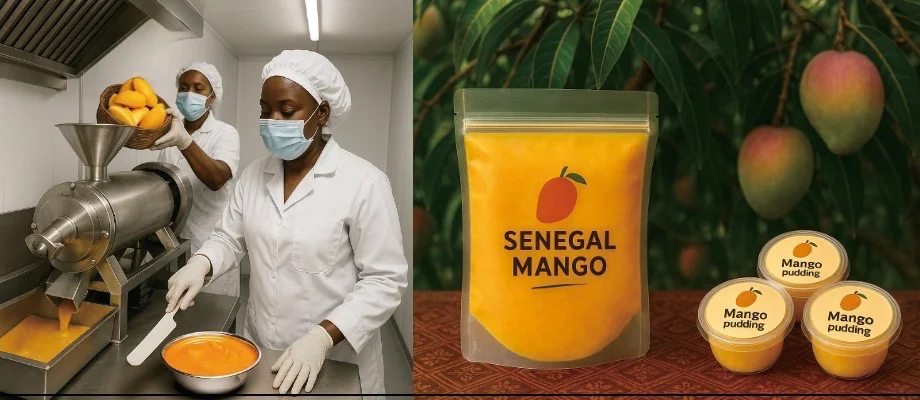
Figure: concept of mango processing and sales in the export destination countries
Since its founding in 2018, SUCRECUBE Japon has been rooted in Senegal and has kept working on local issues. It has brought solar power and LED lighting, the “TUMIQUI Smart Kit”, to unelectrified health posts to support safe deliveries at night. It has installed a fully off-grid data centre at a school to widen children’s educational opportunities. Through this steady work, the Company has built trust with several local authorities and with the Government. Money cannot buy this kind of asset.
This unusual partnership was possible because of these 7 years of track record and trust.
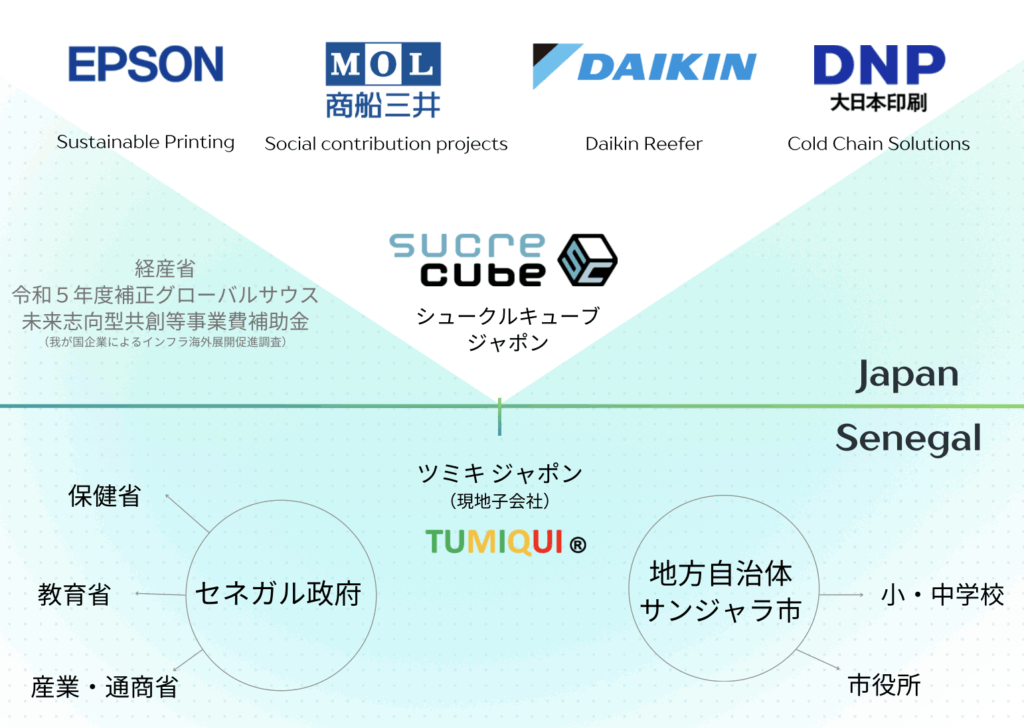
Figure: the Japanese side at the top and the Senegalese side at the bottom. On the Senegalese side, the subsidiary works with ministries and local authorities.
- Japan: the field capability of a start-up (SUCRECUBE) and the world-class technology of 4 major companies
- Senegal: full cooperation from 3 ministries (Ministry of Health, Ministry of National Education, Ministry of Industry and Commerce) and from local authorities
- Government to government: official support from METI through the “FY2023 (Reiwa 5) Supplementary Budget Subsidy for Future-Oriented Co-Creation Projects with the Global South (Survey to Promote the Overseas Expansion of Infrastructure by Japanese Companies)”
This partnership is not the conventional scheme of delivering aid from Japan. The Senegalese government, Japanese private companies and local authorities each bring their own role and work together towards a shared goal.
The structure has three layers: trust, technology and policy needs. It is designed to work as a self-reliant business model that is both profitable and socially beneficial. This sets it apart from conventional ODA. The model has moved from “aid” to “co-creation” and on to “industrialisation”. It shows a new form of sustainable development in Africa.
Corporate partners: the technology of 4 major companies in one integrated model
This project is possible only because professionals in each field bring their best technology.
Mitsui O.S.K. Lines, Ltd.: global logistics
An expert in international shipping and logistics, the company supports the pilot of this project as part of its social contribution activities. It supports food loss reduction and the building of a sustainable cold chain in Africa.
Seiko Epson Corporation: printing technology for local services
Using its high-precision, low-power printing technology, the company places its printers in the digital KIOSK terminals. Local residents can use print services for daily life, such as administrative documents and ID photos. The aim is to expand the local services of the KIOSK and to generate revenue.
Daikin Industries, Ltd.: energy-saving refrigeration technology
A global leader in air conditioning and refrigeration equipment, the company provides its refrigerated container for this project. Its technology keeps food cool reliably in the Senegalese climate. The aim is to reduce food loss in Africa.
Dai Nippon Printing Co., Ltd. (DNP): high-performance insulation technology
The company draws on technology and know-how built up in functional films and logistics. It provides high-performance vacuum insulation panels for the refrigeration unit. This supports a high-quality, sustainable cold chain with high energy efficiency and hygiene.
Expectations in Senegal and Japan
The project has drawn strong expectations not only in Senegal but also in Japan.
Serigne Guèye Diop (Minister of Industry and Commerce, Senegal) “I know well that SUCRECUBE (and its local subsidiary TUMIQUI JAPON) has steadily built a track record in education in Senegal. This project is an excellent new challenge based on that trust and experience. In the future, I very much hope that they will also work, with Japanese technology and partnerships, on the storage of agricultural products, which is an issue of national importance. One example is the storage of harvests on the scale of several hundred thousand tonnes.”
Ken Shibusawa (CEO, Shibusawa and Company, Inc.) “Africa is ‘far’ from Japan. Senegal is French-speaking, and relatively few Japanese companies operate there. This challenge aims to solve social issues there. The partnership with several major Japanese companies should leave a strong impression of the value of ‘Made With Japan’ on local people. As a pioneer opening a new path in Africa, I sincerely look forward to its further growth.”
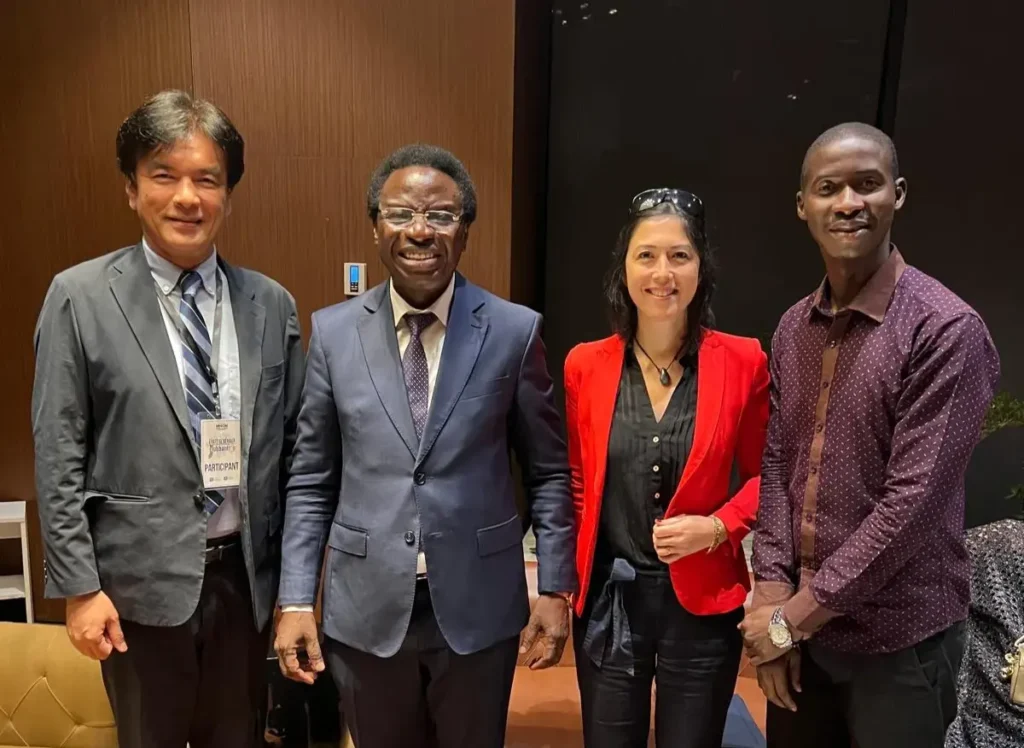
Above, from left: Koichi SATO, CEO, Serigne Guèye Diop, Minister of Industry and Commerce, and members of TUMIQUI, the Senegalese subsidiary of SUCRECUBE
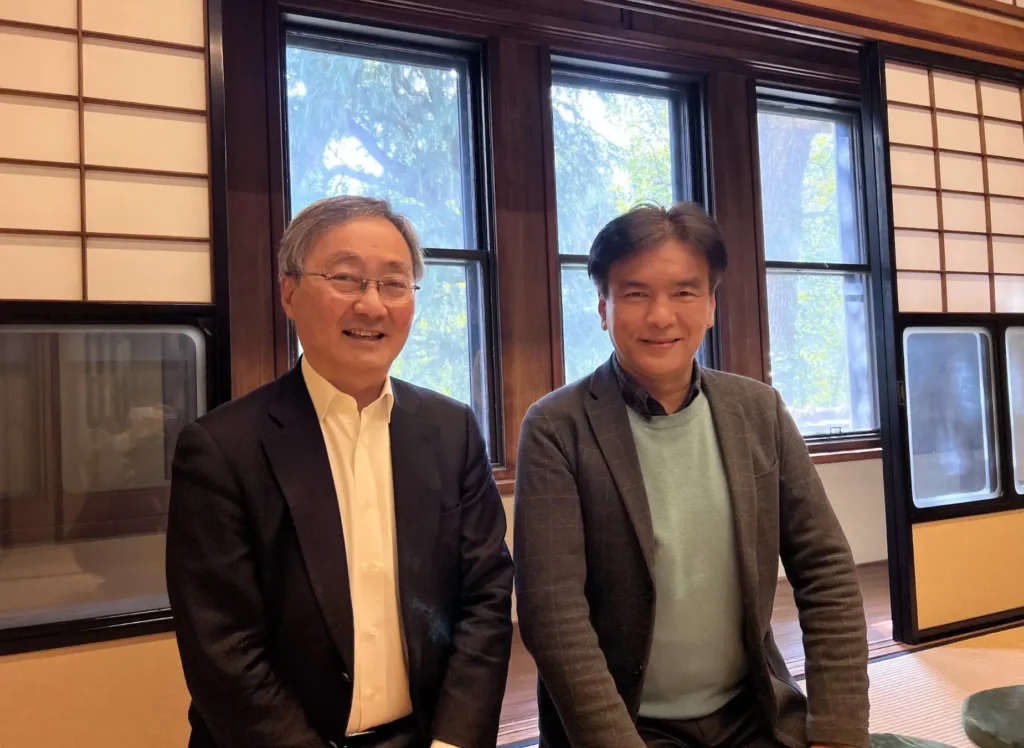
Above: Ken Shibusawa (left) and Koichi SATO, CEO
Origins: why Koichi SATO, CEO, started this project
For 7 years, Koichi SATO has worked only on business in Africa. He brought power to unelectrified health posts and telecommunications to schools. Through this work, he came to a conclusion: “Aid alone cannot sustain the future. To support people’s lives, a business that makes a profit and supports jobs is essential.” At that time, a Senegalese colleague said with a smile, “Monsieur Sato, it’s mango.” This was the turning point.
“I am building on the technical capability gained from power and telecommunications infrastructure in Senegal, and on our trust with the Government. Under “Made in Senegal with Japan”, I am working to create a new future for Africa and Japan. That is my mission.”
Expected impact
This integrated model is more than equipment. It can become infrastructure that changes the structure of the country.
Environmental impact
- Direct reduction of CO₂ emissions through less food loss.
- High energy efficiency through optimised insulation, cold storage materials and temperature control.
- Creation of carbon credits through international certification such as Gold Standard.
Economic impact
- High value-added processing raises the unit price of products to 2 to 3 times the local price.
- Expansion of export channels, mainly to Japan and France (EU organic certification is also under consideration).
- Foreign currency earnings that improve the national current account and strengthen international credibility.
Social impact
- More than 15 direct jobs per site (2026 estimate).
- Practical technical training and ICT education for women and young people.
- Better access, through the KIOSK, to administrative and financial services that were hard to reach before.
By 2030, the Company plans to expand across West Africa. It will present this co-creation model to the world as a new diplomatic and economic model between Japan and Senegal.
Schedule
- June 2025: joint pilot starts in Senegal.
- August 2025: presentation of this co-creation model and its outlook at TICAD 9 (Tokyo International Conference on African Development)
- February 2026: scheduled end of the project under the FY2023 (Reiwa 5) Supplementary Budget Subsidy for Future-Oriented Co-Creation Projects with the Global South
(Survey to Promote the Overseas Expansion of Infrastructure by Japanese Companies) - From March 2026: based on the pilot results, expansion to neighbouring countries and integration of digital financial services are planned.
The Company is confident that this project will become a new model case for Japanese start-ups and major companies working together on business in Africa.
Next steps for this co-creation model and new partnerships
The project goes beyond introducing technology or providing aid. It aims to build a self-reliant economic model that creates sustainable jobs and profits through local storage, food processing and export. In the future, the Company plans to obtain quality certification such as HACCP in Senegal and to scale up exports to Japan and Europe. The aim is an agro-industrial value chain that links Africa to world markets. The expected social impact includes higher incomes for local farmers, jobs for young people and employment support for women.
The Company intends to use this work in Senegal as a role model for business in Africa and the wider Global South, and to create more co-creation projects.
Companies and organisations that share the aims of this project and are interested in creating new value are welcome to contact the Company. For details, please use the page below.