Report on the education support project in Senegal
Better learning environments in classrooms and concrete results
Introduction: purpose of the project
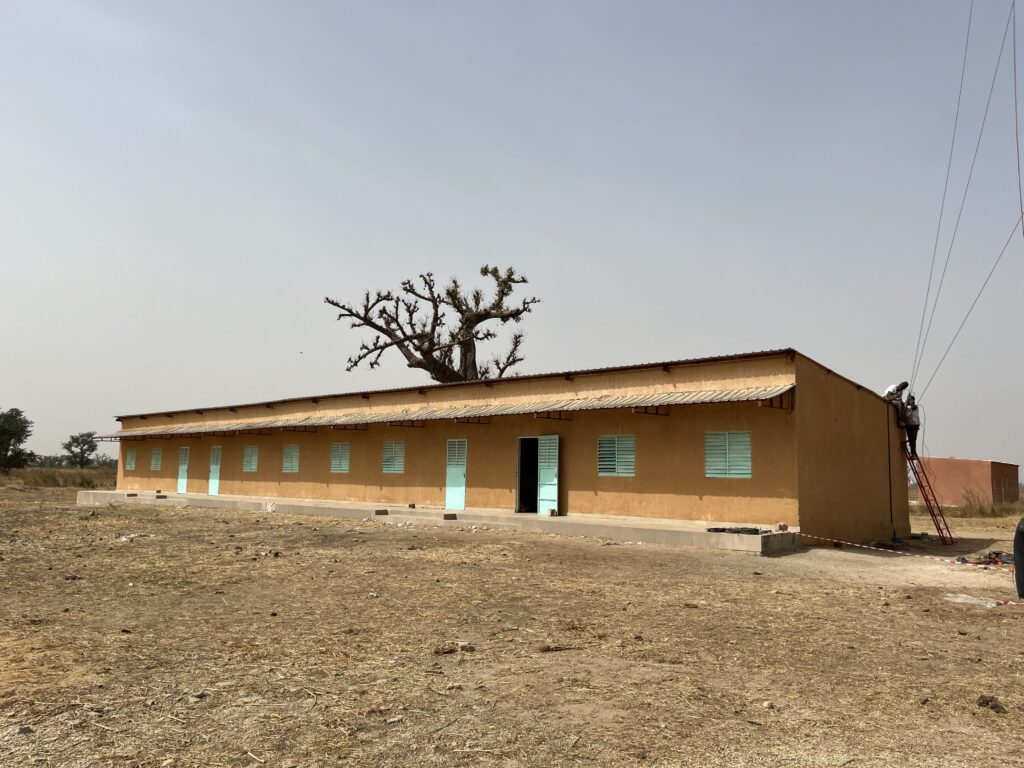
In many rural areas of Senegal, power infrastructure is not in place. As a result, school learning time was limited to daylight hours. Digital teaching material was also hard to use. This contributed to the education gap with urban areas. To address this issue, the Company started a project to improve children’s learning environment with a solar-powered power supply. This report describes the history of the project and its concrete results.

Chapter 1: Background and history of the project
The project has run for 7 years, since 2018. Throughout, the Company has worked to understand the needs of Senegalese schools and has looked for answers together with them.
Early issues At the start, the portable power unit the Company provided (386Wh) was mainly intended for health posts. When it was trialled in schools, teachers made specific requests based on classroom needs. “We need a battery that lasts longer to use in lessons.” “We want to use a television and a computer at the same time.”
Product improvements based on field requests The Company improved the product several times in response to these requests.
- 1st generation (2018-2020): the business started with a 386Wh model
- 2nd generation (2020-2024): capacity increased to 580Wh at the request of teachers
- 3rd generation (2025-): an 864Wh model developed for longer lessons
This development history shows how the Company has started from local needs and pursued practical answers.
Chapter 2: Main features of the “TUMIQUI Smart Kit”
The TUMIQUI Smart Kit was developed to reflect field requests. It has 3 practical features designed for use in African schools.
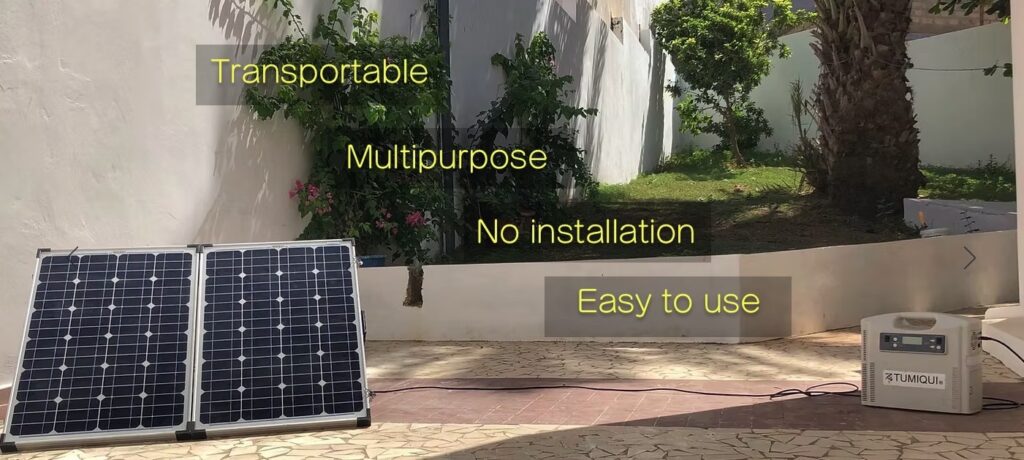
Feature 1: Portability reduces the risk of theft Theft was a major problem with fixed solar panels. The TUMIQUI Smart Kit is portable, so teachers can keep it overnight in a locked staff room or at home. This greatly reduced concerns about the safety of the equipment.
Feature 2: Simple operation for everyone The Company made operation simple so that people unfamiliar with IT equipment can use it with confidence: “just insert a USB stick and use the TV remote control”. As a result, many teachers use digital teaching material right away, without special training.
Feature 3: Performance for stable learning Thanks to the abundant sunshine of West Africa, the kit can be fully charged in about 5 to 6 hours. The 864Wh battery can play a television for more than 13 hours on a single charge. This provides a stable learning environment that is less affected by the weather.
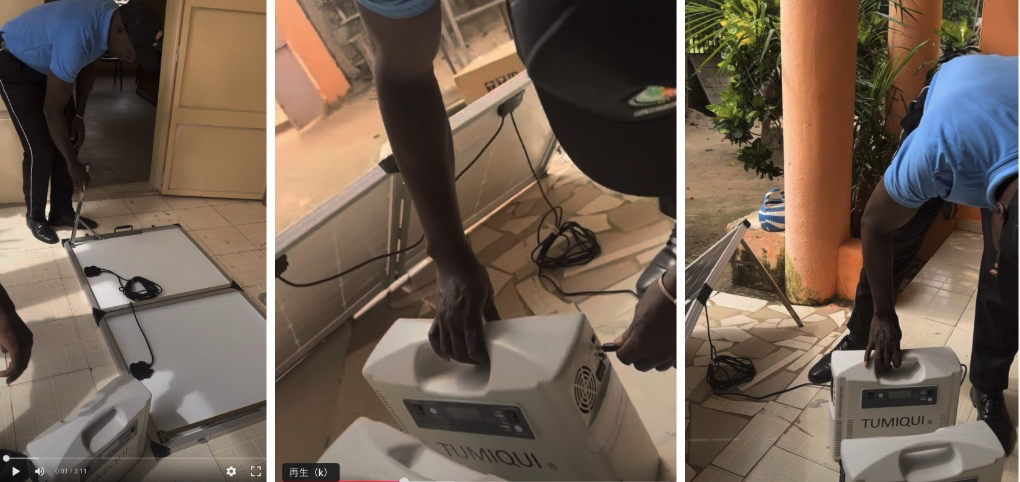
A user connecting the TUMIQUI Smart Kit to a solar panel
Chapter 3: Concrete results
The introduction of the TUMIQUI Smart Kit greatly improved the learning environment at each school. The results are clear in quantitative terms.
Result 1: Better academic results The most notable result was in students’ examination pass rates. At Ndioukh Fissel Primary School, results improved significantly in the year after introduction, as shown below.
Pass rate, primary school leaving examination
31% → 77%
Pass rate, lower secondary school entrance examination
59% → 97%
These objective data show that the use of digital teaching material directly improved students’ understanding and motivation.
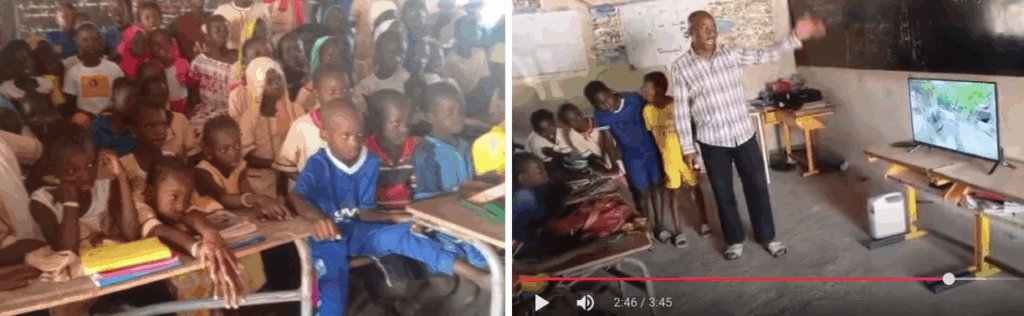
A lesson using the TUMIQUI Smart Kit and a television. The students are paying close attention.
Result 2: Better learning quality with printers At the pilot school, an EPSON EcoTank printer was installed, running on the Company’s power supply. In just 2 months, more than 7,000 sheets were printed and used for teaching.
- Distribution of teaching material and worksheets
- Visual lessons with colour diagrams and photos
- Student ID cards with each student’s photo
These printed materials improve the quality of learning. They also strengthen students’ sense of belonging to their school.
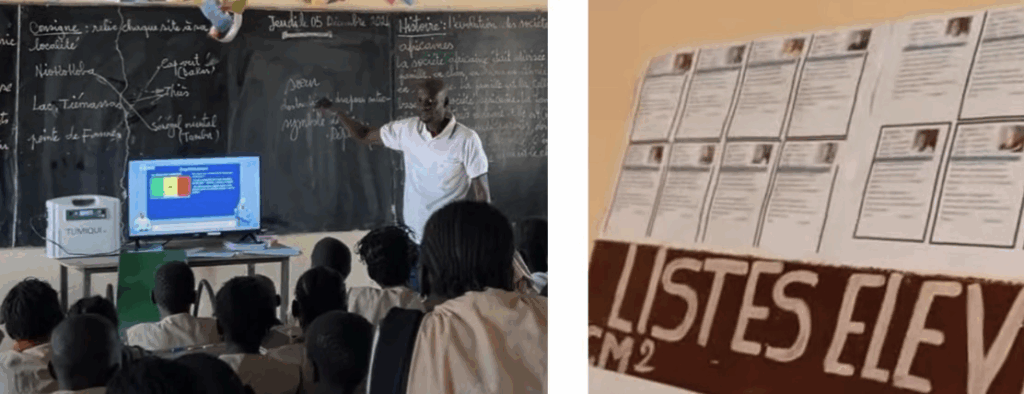
Student ID cards with each student’s photo, printed and posted
Result 3: Better working conditions for teachers Many teachers report a lighter workload and better lessons. “I can now prepare lessons without worrying about power cuts,” one teacher said. “Digital teaching material makes it easier to hold the students’ attention,” said another.
Chapter 4: Effects in schools, from student motivation to sustainable operation
In areas without power infrastructure, TUMIQUI makes it possible to use digital teaching material and greatly improves the quality of education. Schools that use it report direct educational effects, such as higher student motivation. They also report points that support a sustainable operating model. Operation requires no IT skills, which reduces the load on teachers. The kit is portable, which prevents theft and allows its use as a community resource. Below are specific assessments from head teachers, school inspectors and teachers.
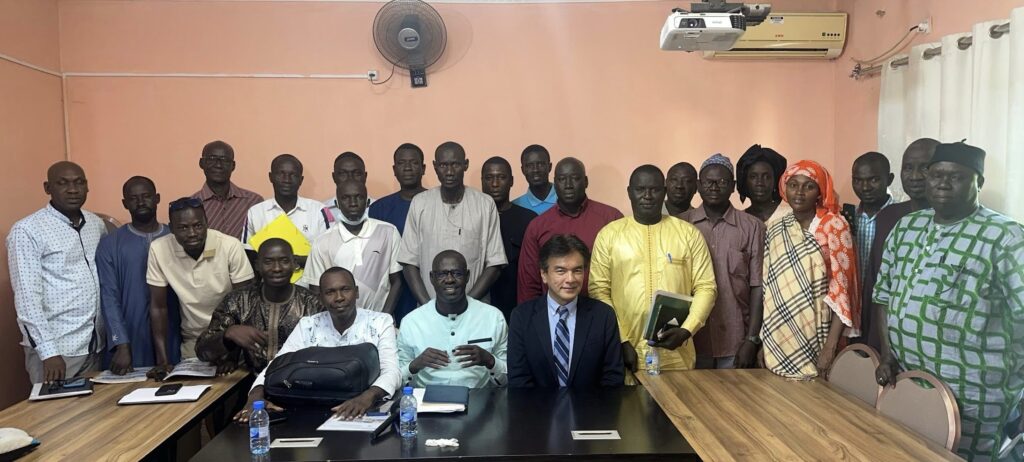
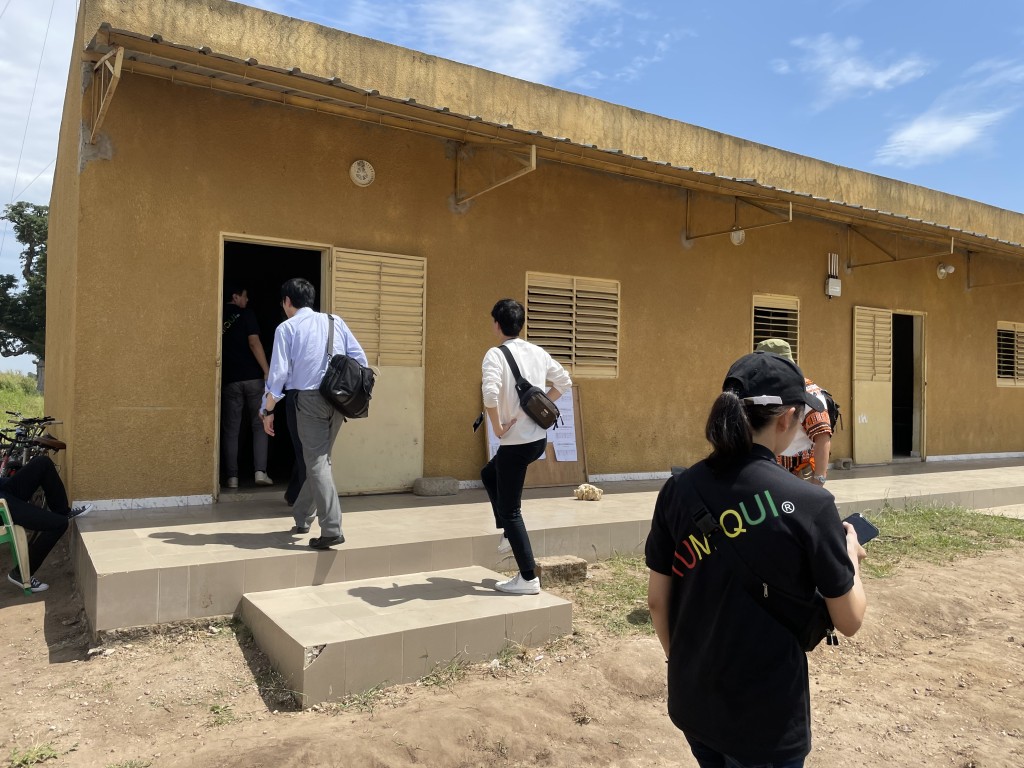
Reporting session with school inspectors and teachers, July 2025
Voices from education professionals
- “The use of digital teaching material has greatly increased students’ motivation and concentration.” (Primary school head teacher)
- “The students are clearly more curious, especially in science and geography lessons.” (Primary school teacher)
- “The key to success was simplicity. Even teachers who were unsure about their IT skills could operate it easily, just by connecting a USB stick to the television.” (Primary school head teacher)
- “Once lessons with TUMIQUI and a television started, the students began to concentrate and understand.” (School inspector)
- “We can take it home from school, so we don’t worry about theft. At weekends, it is also used for community meetings and for children’s study.”
Chapter 5: Next steps
The business model established in Senegal has been recognised for its effectiveness and scalability. It is now expanding across borders.
- Official cooperation with the Ministry of National Education of Senegal has built solid trust and a track record.
- Based on this track record, a project with an international organisation to deploy the same model in primary schools is under way.
- The kit has also been adopted by IOM (International Organization for Migration), which works in humanitarian settings. This shows that it is versatile and reliable.
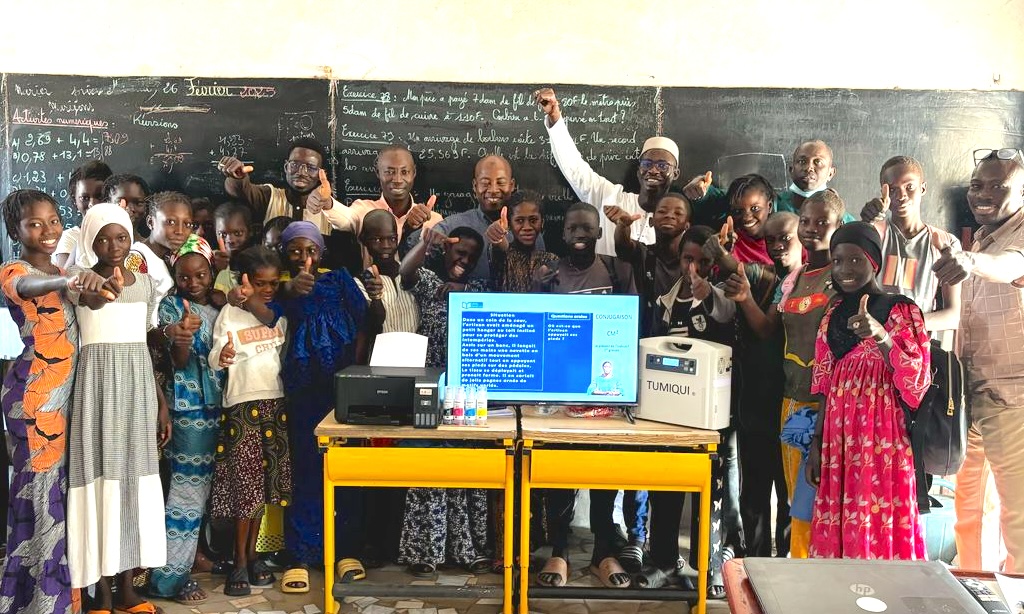
At a school in an unelectrified area where the kit is in use
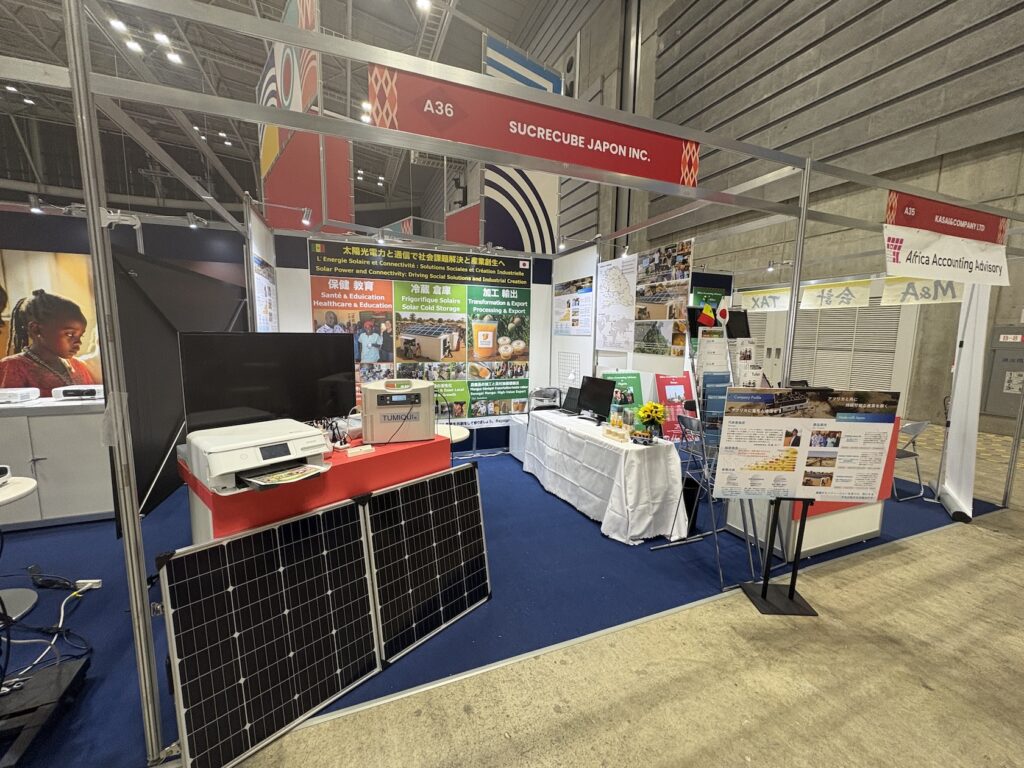
The actual unit is on display at booth A36 at the TICAD 9 Japan Fair. Visitors are welcome to come and see how easy it is to use and what it can do.
Building on this success in Senegal, the Company will continue to work on better learning environments in other African countries. Please contact the Company if you are interested in this project.